Medienguide Fembohaus

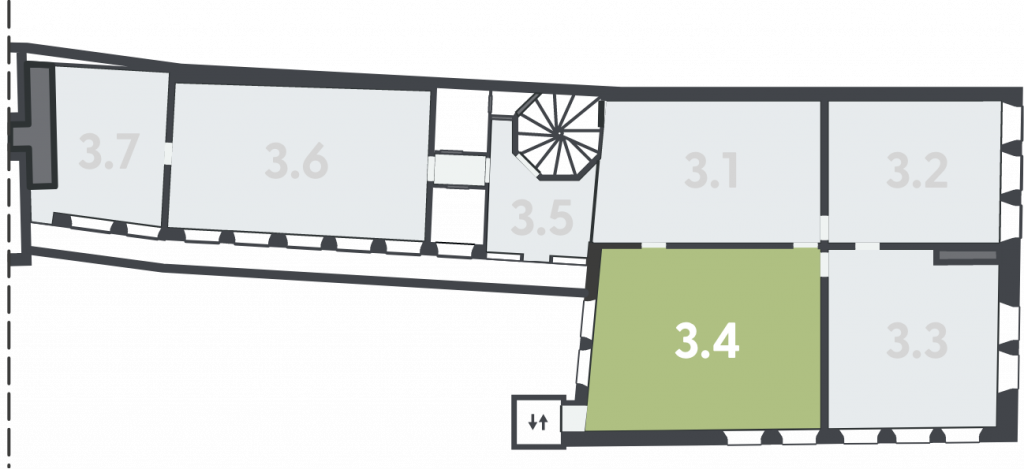
Please use the floor plan or the buttons below to select a room.

3.4 City of Trade and Commerce

11Nuremberg's main marketplace

This painting shows the appearance of the main marketplace more than 400 years ago. The Frauenkirche (Church of our Lady) and the Schöner Brunnen fountain which are depicted remain major landmarks in the cityscape to this day.

This central marketplace occupies the site of a pogrom which targeted Nuremberg's Jews in 1349. Emperor Karl IV had granted the city permission to demolish the Jewish quarter and establish the marketplace in its stead. Almost 600 Jewish women, men, and children were murdered by an angry mob.

A variety of goods were sold on the marketplace, the Hauptmarkt. These included vegetables and other agricultural products. Sheaves of corn are visible in the picture. The stall at lower left is selling smoked fish.

The men in black which can be discerned at the left edge of the picture are substantial merchants. This part of the marketplace, the Herrenmarkt, was used for financial and monetary transactions. It became the nucleus for the Nuremberg stock exchange. Bartholomäus Viatis, the founder of the Banco Publico is presented at the next station.

22Viatis and the Banco Publico

Bartholomäus Viatis was born in Venice in 1538. He moved to Nuremberg and obtained its citizenship. Throughout his life, he was an active merchant who bought and sold wares in different places. Together with his son-in-law, Martin Peller, he founded a large and influential trading house.

Viatis and Peller are considered the founders of the Banco Publico, a bank which allowed its clients to make cash-free monetary transfers. In an age when payment by coins was the norm, the transfer of large sums posed a considerable risk as silver and gold had to be carried by coach across considerable distances. One way to avoid this was to draw a bill of exchange at a stock exchange. This note would record a business transaction on paper which could then be exchanged into coinage at a bank in another location.

The free imperial city of Nuremberg was an important site for financial transactions. It was also renowned for its trade in textile and metal goods. In order to guarantee the quality of these products, an assay office (the so-called Schau) was established.

33The spice assay (Gewürzschau/Safranschau) – The quality of goods

The assay offices of the Gewürzschau and Safranschau were primarily concerned with monitoring the quality of wares. This kind of quality control had existed since the Middle Ages. Spices intended for sale in the city could be presented from 9-11 am from Monday to Saturday in the Untere Waage, close to today's Hauptmarkt. The painting allows you to follow the procedure of the Schau from left to right. Merchants would present their wares, and so-called Unterkäufel officials would inspect, weigh, and tax them. Once the spices and saffron had undergone this procedure, the Zeichenmeister would stamp the goods with the city's seal. They were now ready to be sold in Nuremberg.

A close-up look: Nuremberg and the spice trade

Saffron, pepper, ginger, cloves, cinnamon, nutmeg, and cardamom were popular spices during the Late Middle Ages and the Early Modern Era. They were imported from the Orient, India, Ceylon (today's Sri Lanka), and other places. Nuremberg held an important position in the European spice trade. The city maintained a tightly structured trade network which enjoyed numerous tax exemptions. The connections to Italy were particularly important, as the great Italian maritime cities such as Venice and Genoa were the dominant hubs of the spice trade. Later, Antwerp became an important emporium for the growing trade with the New World (America).

The great merchant houses of Nuremberg had bought and sold spices since the Middle Ages. This flourishing trade led to the creation of one of the most renowned specialities of the city: the Lebkuchen gingerbread. They had been produced in Nuremberg since the Middle Ages, but an important milestone in the history of this delicacy was the imperial diet held in Nuremberg in 1486.
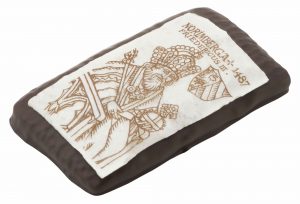
Kaiserlein Gingerbread, Gingerbread Schmidt

Emperor Friedrich III gave a way 4000 pieces of gingerbread imprinted with his image to children. It was known as Kaiserlein (little emperors). In remembrance of this event, the Kaiserlein were baked every year up until the 18th century. This variant exists to this day.

If you proceed to the next room, you will find out more about Nuremberg's principal products. These include the metal goods which made the city a household name since the Early Modern Era.

44Diplomatic gifts – The works of the goldsmiths

As the courts of princes and rulers grew ever larger and more splendid in the Renaissance era, a system for the exchange of ambassadors became established. Diplomacy grew ever more important. Gifts and reciprocal gifts were a vital component of such exchanges. They were meant to consolidate political alliances, express loyalty and respect, or serve as a medium of representation. Works of art were particularly useful in this respect, as they were imbued with significance.

Works of the goldsmiths' craft were highly valued by the city council of Nuremberg when it came to presenting gifts to high-status visitors. The craftsmen would fashion goblets, cups, or tankards according to the specifications of the council. Elaborate glass objects were another favourite. The city liked to show off its wealth with these expensive gifts, but it also used them to advertise the skill of its craftsmen.

CITY MUSEUM AT FEMBO-HAUS
MEDIA GUIDE

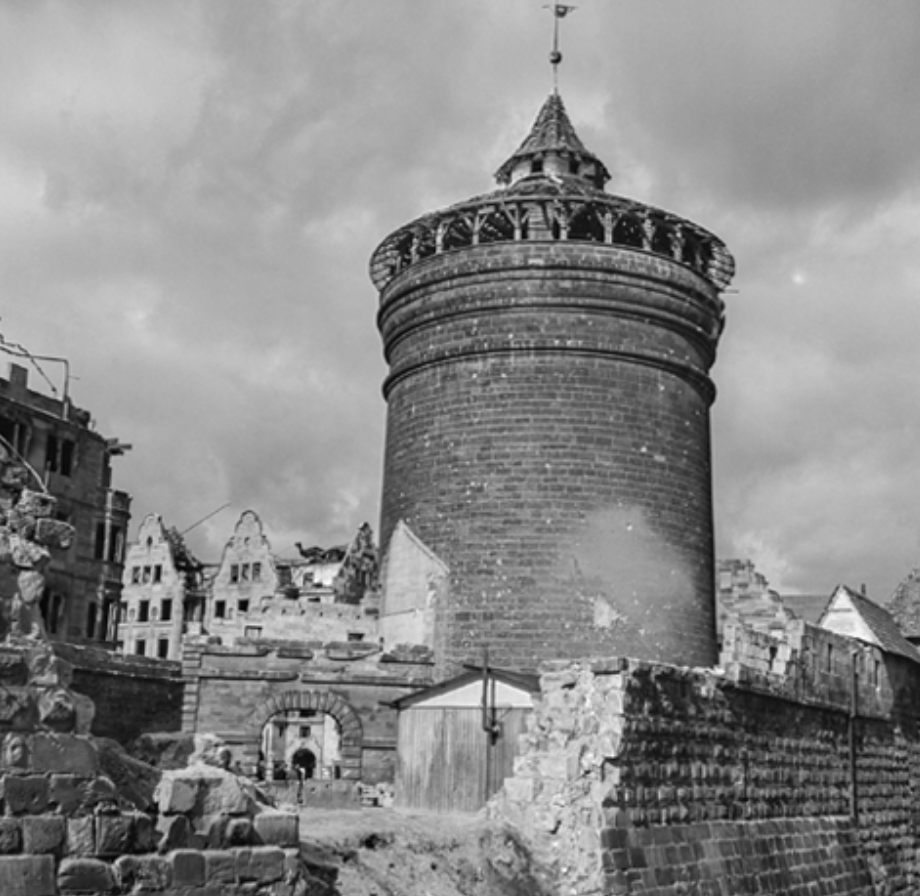
The Laufer Schlagturm, one of the few remaining towers of the penultimate city fortifications from the 13th century.

Hochbauamt
1955
Nuremberg City Archives
A38/N-13-19

The Tucher Castle in Hirschelgasse, the former summer residence of the Tucher patrician family from the 16th century.

Hochbauamt
1949
Nuremberg City Archives
A39/III-Fi-H-157

The Toplerhaus on Paniersplatz before its complete destruction, representative town house of the Topler patrician family from the late 16th century.

Staatliche Bildstelle Berlin
1935
Nuremberg City Archives
A44/C-6082-1

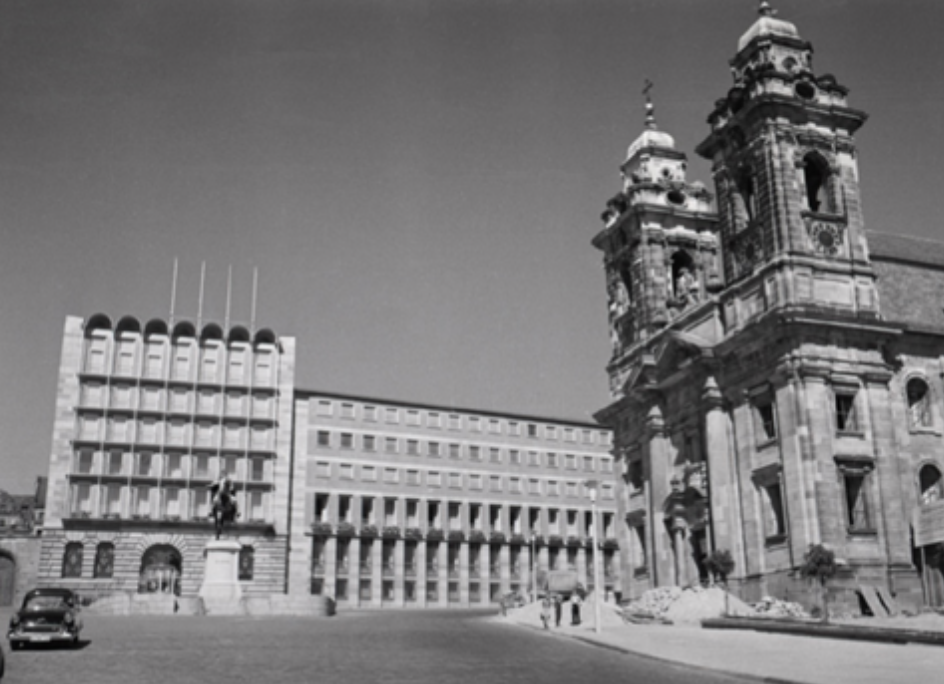
The Pellerhaus on Egidienplatz, originally a representative residential and commercial building in the Renaissance style, which was converted into a new building after 1945.

Armin Schmidt
1958
Nuremberg City Archives
A50/AS-253-2

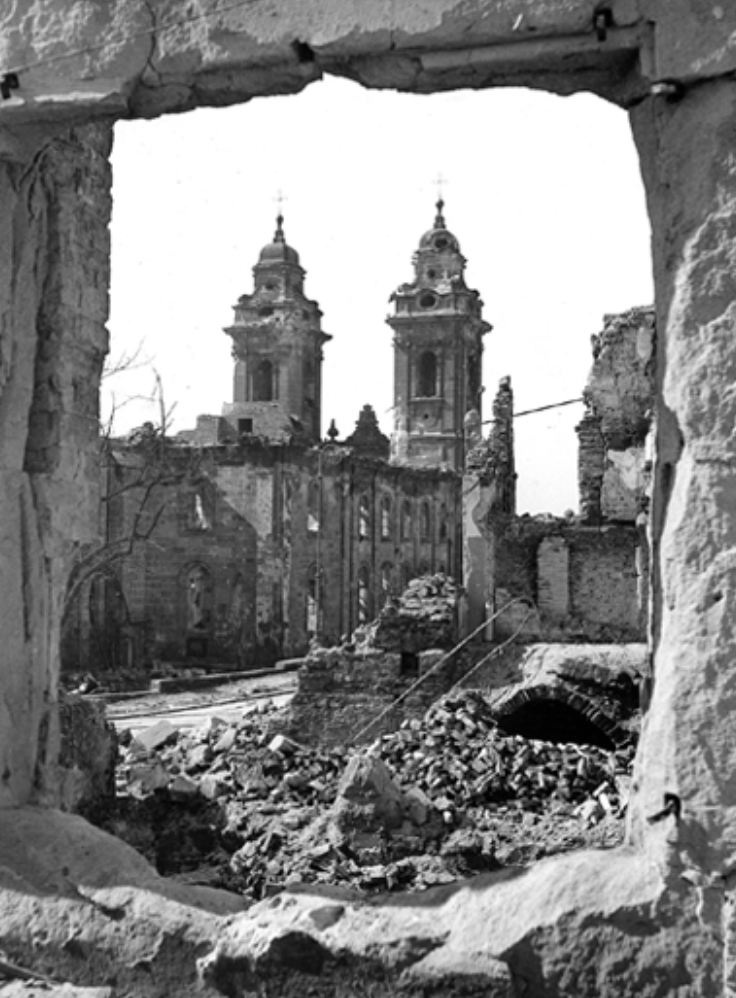
The Church of St. Egidien on Egidienplatz, the only baroque church building in Nuremberg from the early 18th century.

Unknown photographer
before 1945
Nuremberg City Archives
A76/RF-021-F1-5

The Laufertorturm, one of the four main towers of the last medieval city fortifications.

Lala Aufsberg
1953
Image archive photo Marburg
Aufnahme 760.878

The Tiergärtnertorturm, one of the four main towers of the last medieval city fortifications.

Hochbauamt
1954
Nuremberg City Archives
A41/Repro-100-08

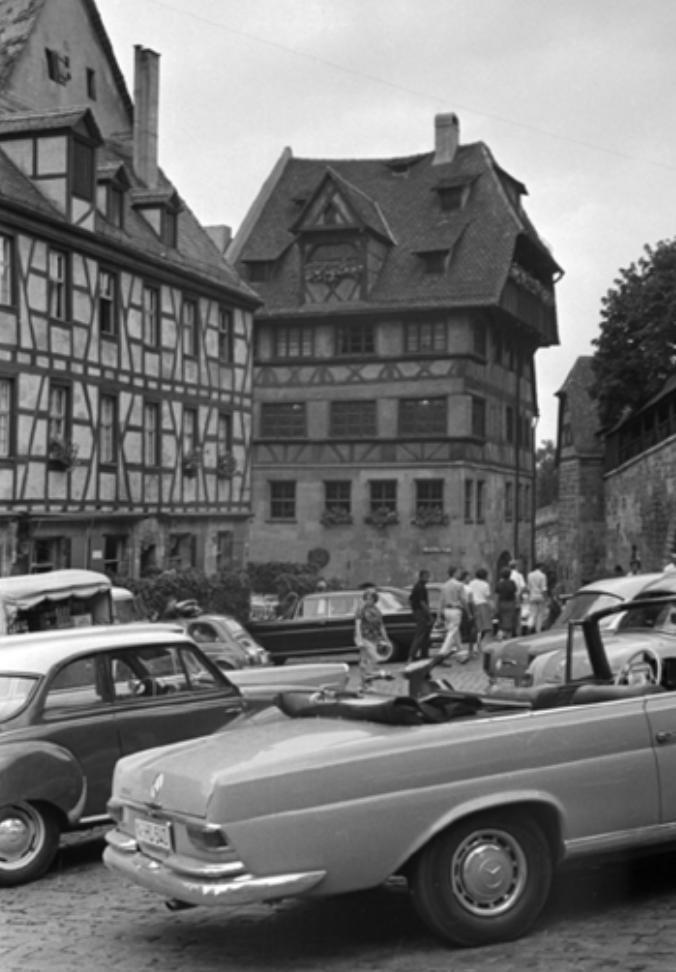
The Albrecht Dürer House on Albrecht Dürer Street, half-timbered building and former home of the important German artist from the 15th century.

Armin Schmidt
1950-1970
Nuremberg City Archives
A50/AS-600-41

Nuremberg Castle, the residence of the traveling kings and emperors of the Holy Roman Empire since the Middle Ages and the city's landmark.

Helga Schmidt-Glassner
1950-55
Image archive photo Marburg
Aufnahme 1.565.780

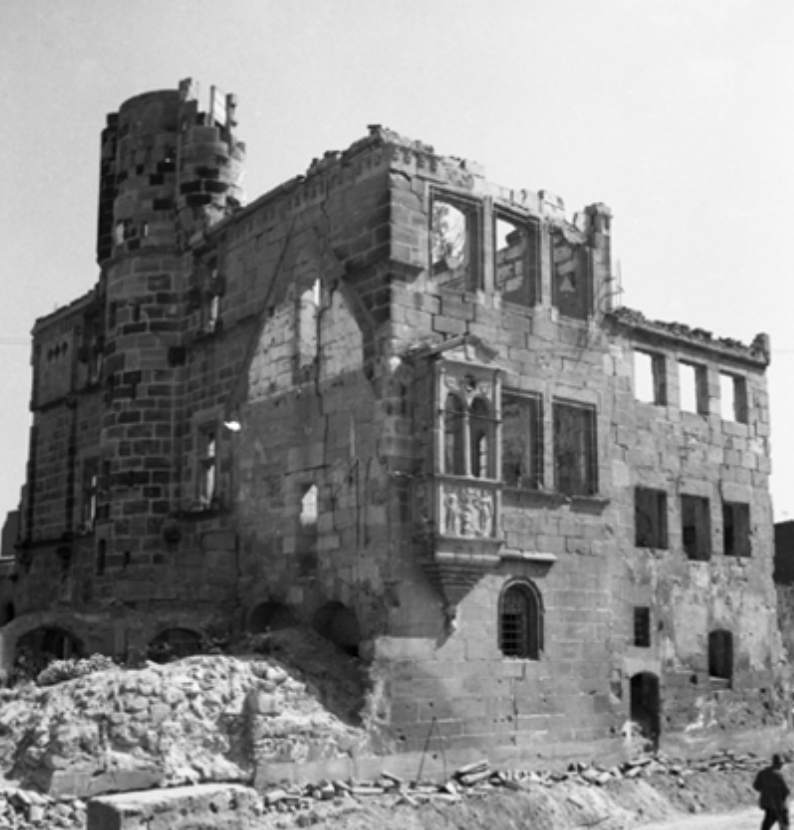
The Fembo House on Burgstrasse, the only surviving merchant's house from the late Renaissance.

Walter Schröder
1950-1970
Image archive photo Marburg
Aufnahme 908.033

The Sebalduskirche on Winklerstrasse, the oldest parish church in the city and burial place of the local saint Sebald.

Armin Schmidt
before 1945
Nuremberg City Archives
A50/AS-225-34a

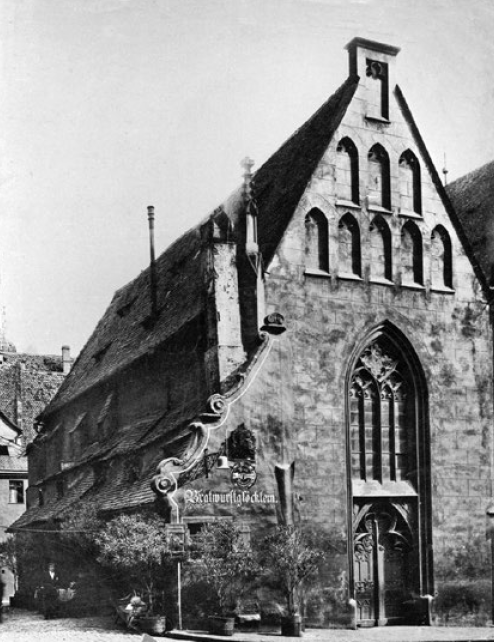
The Moritz Chapel at the Schürstabhaus before its destruction, small late medieval town church with a popular restaurant “Bratwurstglöcklein”.

Hochbauamt
before 1944
Nuremberg City Archives
A41/II-LR-727-14

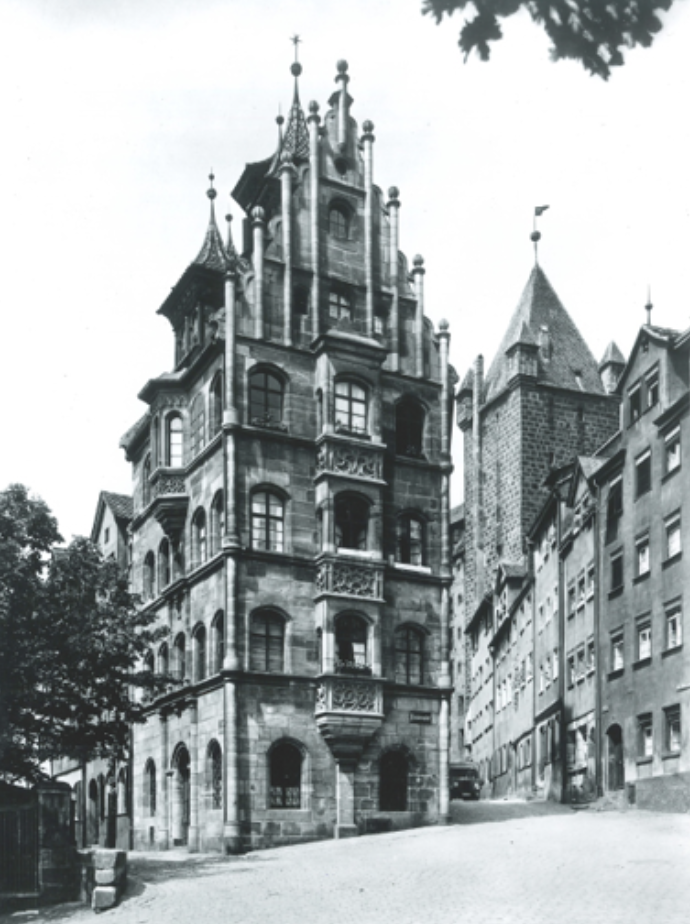
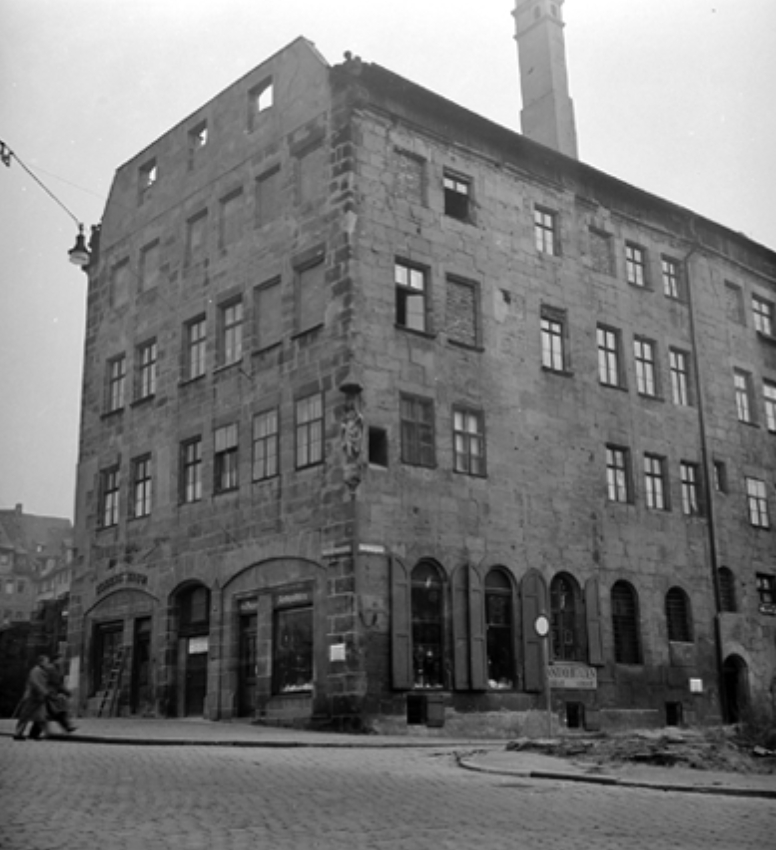
The Schürstabhaus on Albrecht-Dürer-Platz, residence of the patrician Schürstab family from the Gothic period.

Hochbauamt
1951
Nuremberg City Archives
A39/III-Fi-A-196

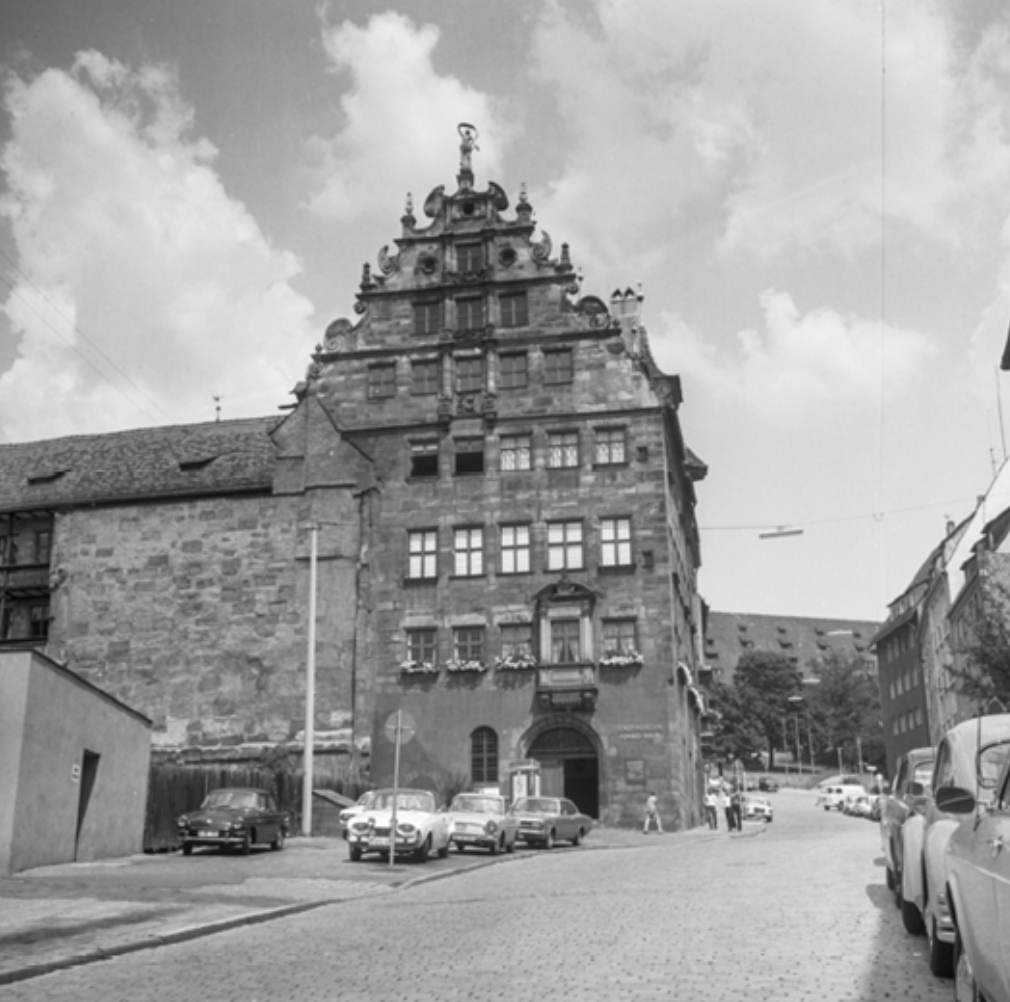
The town hall on the main market, an important Renaissance building by the architect Jakob Wolff the Elder. J. and seat of the Nuremberg Council in imperial city times.

Lala Aufsberg
1953
Image archive photo Marburg
Aufnahme 760.869

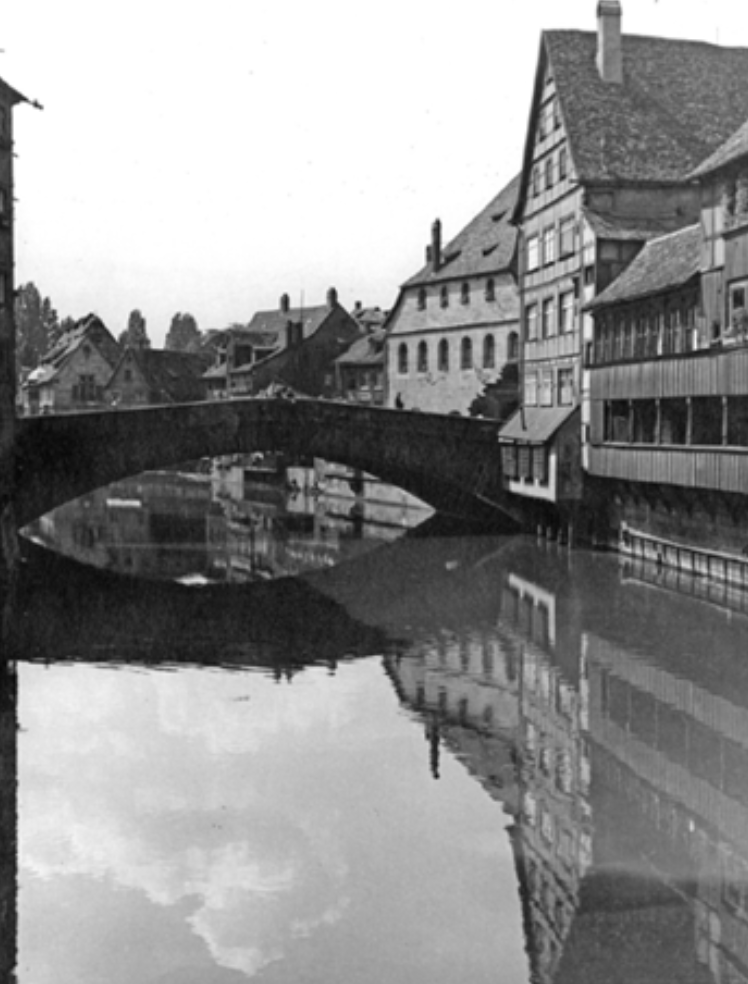
The Fronveste with Schlayerturm, river bridge of the last city fortifications on the Pegnitz outflow, which was used as a weapons depot and prison.

Armin Schmidt
1958
Nuremberg City Archives
A50/AS-230-32

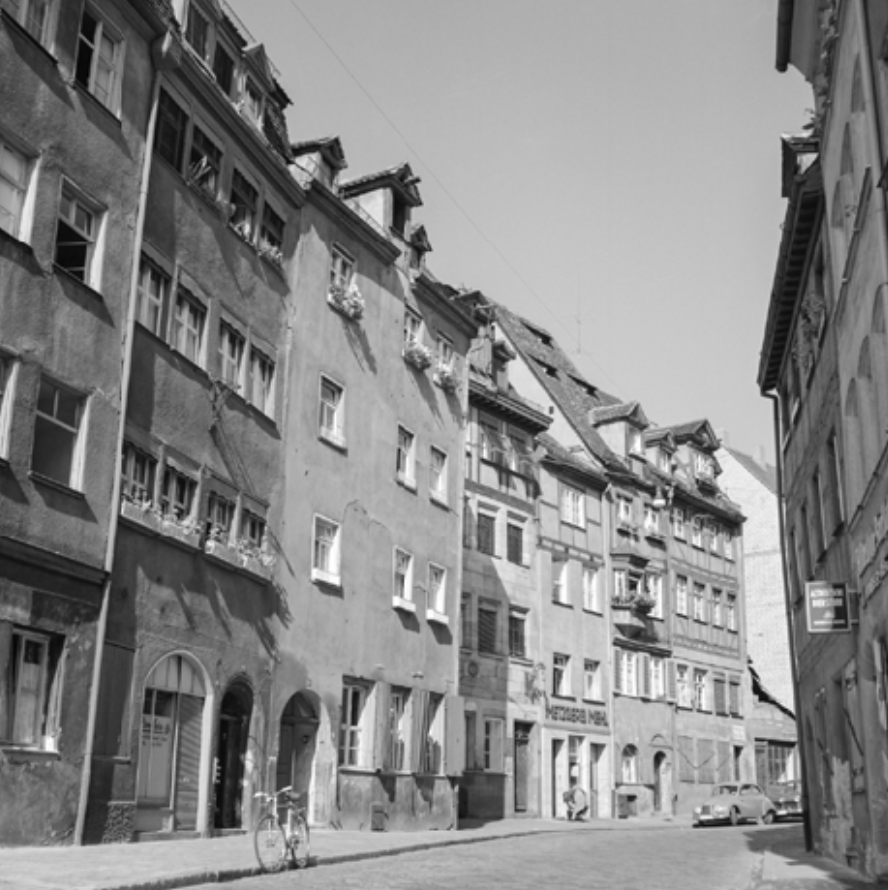
Weißgerbergasse, the craftsmen's quarter of Nuremberg's white tanners, before the uncovering of the medieval half-timbered facades.

Lala Aufsberg
1960
Image archive photo Marburg
Aufnahme 786.238

The Weinstadel at Maxplatz, the imperial city's wine warehouse and one of the largest half-timbered buildings in Germany.

Armin Schmidt
1959
Nuremberg City Archives
A50/AS-289-4

The executioner's house with executioner's footbridge at the flea market. Ensemble of the penultimate city fortifications from the 13th century and later residence of the Nuremberg executioner.

Hochbauamt
before 1945
Nuremberg City Archives
A39/III-Fi-K-1448

The Unschlitthaus on Obere Wörthstrasse, a large imperial city granary to supply the city's population and the seat of the Unschlittamt (office for further processing of beef tallow).

Hochbauamt Juli
1953
Nuremberg City Archives
A39/III-Fi-W-297

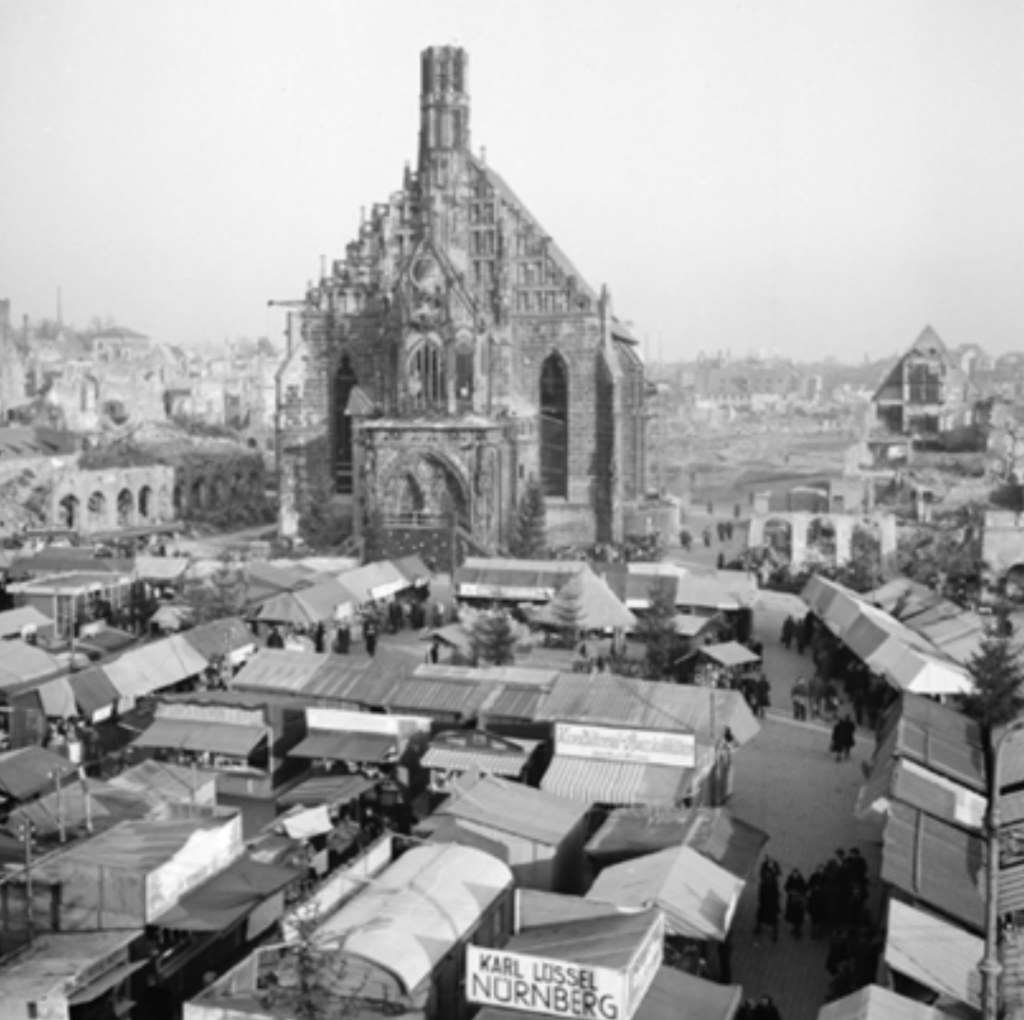
The Frauenkirche on the Hauptmarkt, built in the middle of the 14th century on the instructions of its founder, Emperor Charles IV, in the former Jewish quarter.

Hochbauamt
1948
Nuremberg City Archives
A39/I-182-D

The main market, since the Lorenz and Sebald halves were connected in the late Middle Ages, has been the center of the old town and market square in the former Jewish quarter.

Hochbauamt
1948
Nuremberg City Archives
A39/I-193-D

The Fleischbrücke, an important bridge structure of the German Renaissance and a central traffic junction in imperial city times.

Unknown photographer
1961
Nuremberg City Archives
A64/0101

The Holy Spirit Hospital in Spitalgasse, the largest social institution and most important civic foundation of the Middle Ages.

Armin Schmidt
before 1945
Nuremberg City Archives
A50/AS-600-11

The main synagogue on Hans-Sachs-Platz before its demolition in 1938, a monumental symbol of liberal-bourgeois Judaism in the 19th and early 20th centuries.

Unknown photographer
before 1938
Nuremberg City Archives
A76/RF-013-F1-1

The debt tower on the Vordere Insel Schütt, one of the few remaining towers of the penultimate city fortifications from the 13th century.

Armin Schmidt
1958
Nuremberg City Archives
A50/AS-253-5

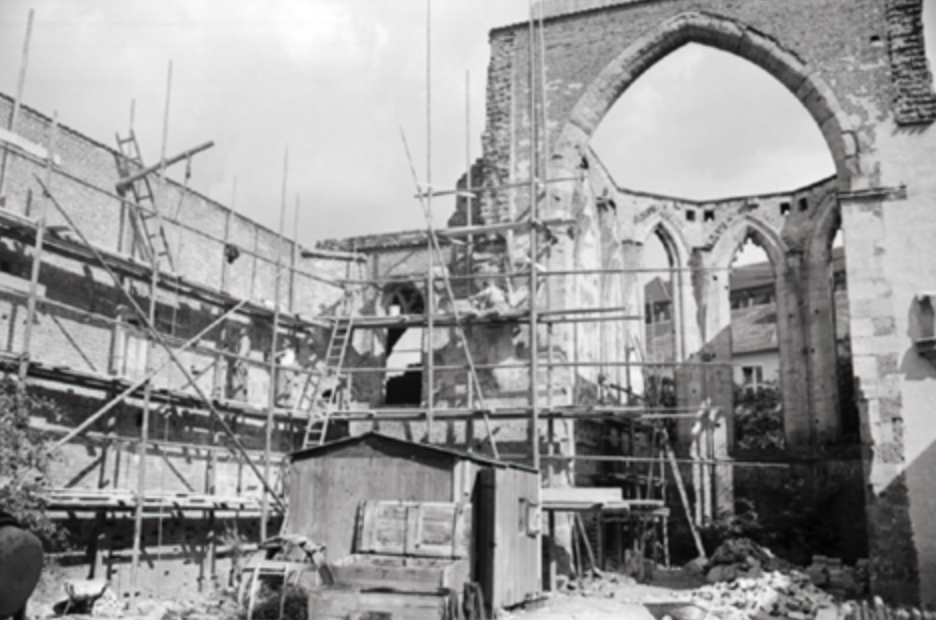
The Katharinenkirche at Katharinenkloster 6, before its destruction, former monastery church of the Dominican Sisters from the 13th century and seat of the Academy of Fine Arts in imperial city times.

Unknown photographer
before 1945
Nuremberg City Archives
A60/I-301

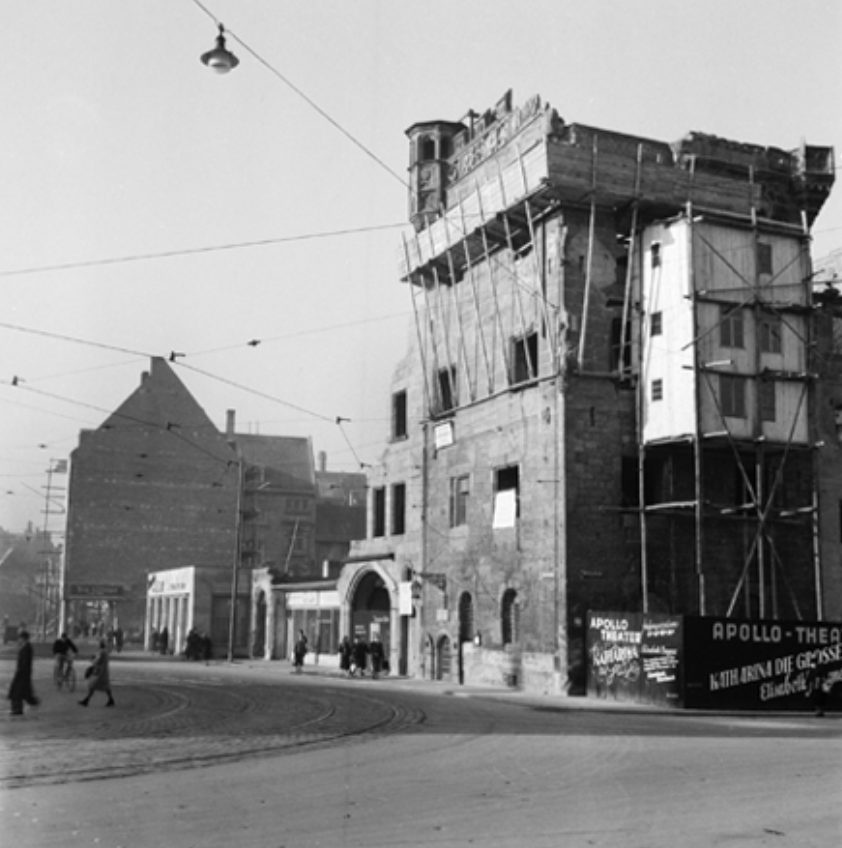
The Nassauer Haus on Karolinenstrasse, the only surviving medieval residential tower.

Hochbauamt
1950
Nuremberg City Archives
A39/III-Fi-K-230

The Lorenzkirche on Lorenzer Platz, one of the two large parish churches in the medieval city and a landmark of Nuremberg.

Unknown photographer
before 1945
Nuremberg City Archives
A76/RF-37-F2-34A

The Church of St. Jakob on Jakobsplatz, a Gothic church building from the 13th century and a stop for pilgrims on the Franconian Way of St. James.

Armin Schmidt
1958
Nuremberg City Archives
A50/AS-220-11

The toll hall at Hallplatz, a large imperial city granary to supply the city's population and the seat of the city's customs office.

Lala Aufsberg
1950-1960
Nuremberg City Archives
A62/LA-60703a

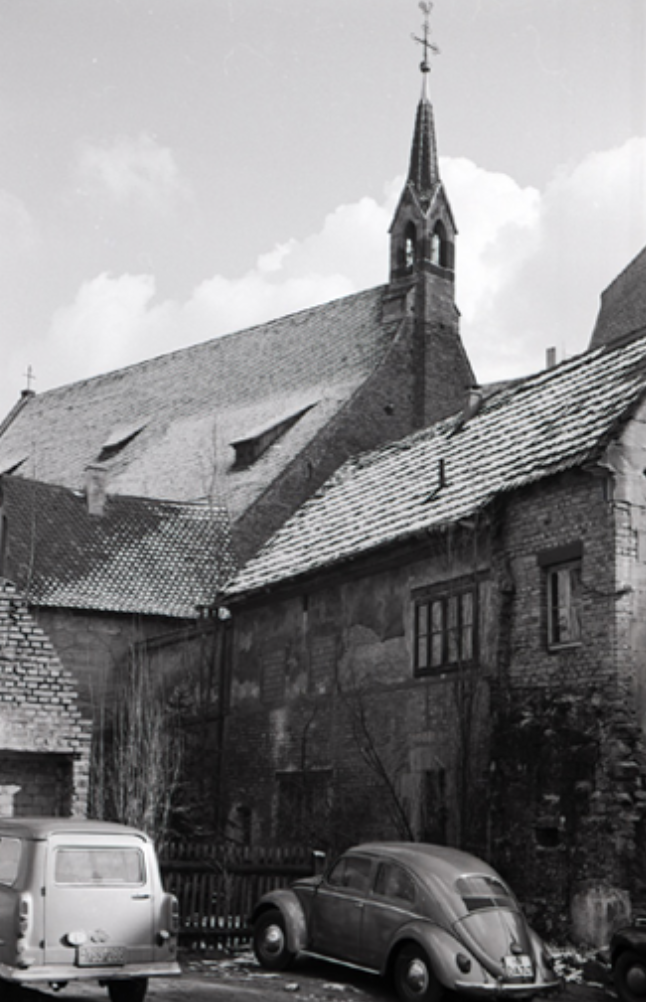
The Klarakirche on Königstrasse, former church of the Poor Clares monastery in Romanesque and early Gothic style.

Armin Schmidt
1958
Nuremberg City Archives
A50/AS-208-4

The Frauentorturm, one of the four main towers of the last medieval city fortifications.

Lala Aufsberg
1950
Image archive photo Marburg
Admission 737,400

The auditorium of the Academy of Fine Arts
photograph by Lukas Pürmayr

A well-guarded caravan of Nuremberg merchants,
Georg Kellner, 1910, mural on the facade
of the IHK building at Nuremberg, © IHK

Nelli Lunkenheimer costumed as the Christkind (Christmas Angel)
2023, © Marion Stephan
Adam and Eve
Albrecht Dürer,
1504,
copperplate engraving
Museen der Stadt Nürnberg,
Kunstsammlungen,
Inv.-Nr. Gr. A. 12779

Putto sculpture
Hesperidengärten (Gardens of the Hesperides)
© Mark Zimmermann

The Kaiserburg castle of Nuremberg,
photograph: Uwe Niklas

Nuremberg bratwurst (sausage)

Self-portrait of Albrecht Dürer,
copy after Dürer
Francisco Nuñez Losada (1889-1973),
1930, oil on wood
Museen der Stadt Nürnberg,
Kunstsammlungen,
Inv.-Nr. Gm 1094

Box-shaped pocket watch so-called Henlein-Uhr
Nürnberg, um 1510
Germanisches Nationalmuseum
Nürnberg,
Inv.-Nr. WI1265

View of the Christkindlesmarkt (Christmas Market) and the Church of Our Lady Frauenkirche
© Florian Trykowski

The imperial insignia and other precious objects, from a work called Leich-Be-Gängnisse
(Klebeband 16, Seite 91),
Stiftung des Fürstlichen Hauses Waldeck und Pyrmont,
Hofbibliothek,
Inv. Nr. FWHB Arolsen II 66e 130,
https://digi.ub-uniheidelberg.de/fwhb/klebeband16/0095G

The Schöner Brunnen fountain in Nuremberg
photograph, Museen der Stadt Nürnberg
Kunstsammlungen

The television tower at Nuremberg
commons

Glazed Elisenlebkuchen gingerbread with almonds
Lebkuchen-Schmidt GmbH & Co. KG
Photograph: Martin Ammon

The exhibition forum regularly hosts special exhibitions. These are not part of the media guide.

Unfortunately, the media guide only covers so far the newly designed storeys.