Medienguide Fembohaus

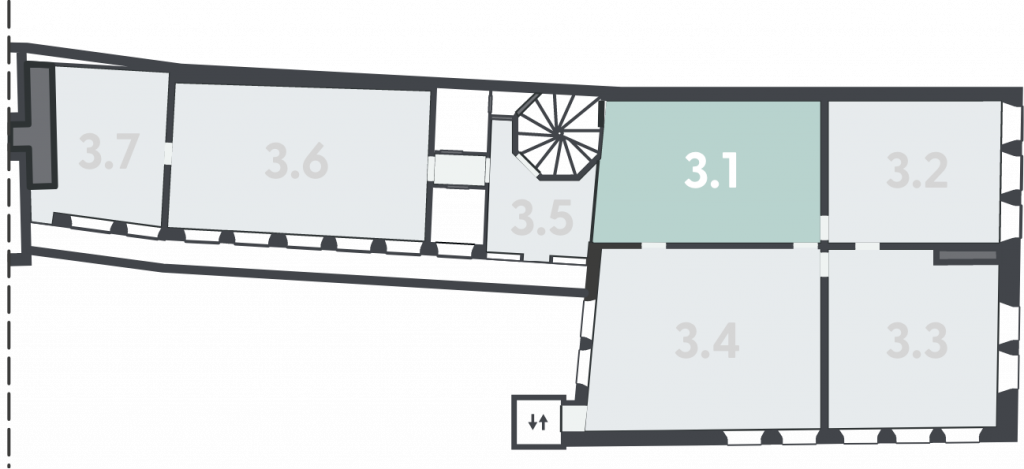
Please use the floor plan or the buttons below to select a room.

3.1 City of arts and crafts

During the city's heyday, the designation "Made in Nuremberg" was a mark of exceptional quality. Nuremberg wares found worldwide customers through a well-developed trading network. The numerous innovative inventions of the city's craftsmen became renowned as "Nuremberg wit". In this room, you can learn about the broad spectrum and the specialities of Nuremberg's crafts.

11Making armour

This suit of armour for foot combat is a prime example of Nuremberg craftsmanship. It was assembled from iron plates by so-called armourers. It provided complete protection to its wearer, as the plates were impervious to blades and projectiles. Great skill was required of the craftsmen to achieve a combination which gave protection as well as mobility.

The armourers were not the only ones to contribute to such a suit of armour. Polishers smoothed the surface so that enemy weapons found no hold on them. Leather craftsmen provided the numerous straps which held the suit together. Chain mail makers supplied either complete chain mail shirts for wearing beneath the plates or pieces of mail for covering vulnerable areas.

Ironworking and the arms industry were the principal crafts practised in Nuremberg. One of the inventions made in the city, the pulling of metal wire, allowed the production of high-quality chain mail and numerous other goods.
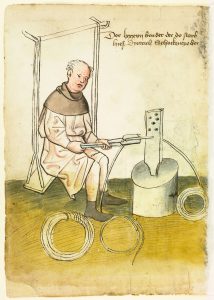
Wire puller, Dietrich Schockenzieher, around 1425, Hausbuch der Mendelschen Zwölfbruderstiftung I, Stadtbibliothek im Bildungscampus Nürnberg, Amb. 317.2°, fol. 40v

In this method, wire was pulled through a series of holes of diminishing diameter or different shapes. This reduced the wire to the desired thickness, which could be wound onto coils. These provided the material for a range of products, from chain mail to needles. At first, the wire had to be pulled by hand using a pair of tongs. Later, water power was used and a mechanical apparatus (developed in Nuremberg) to pull the wire.

While the type of armour shown here was mostly worn by common foot soldiers, it was sometimes adopted by officers as well. Our picture shows Sebald Schirmer, a Feldhauptmann (senior officer), wearing such a suit of foot combat armour in a 1545 portrait.

22Jewish objects

In addition to weapons and other elaborate objects, Nuremberg also produced everyday goods for export. The Sabbath lamp shown here is a good example. It was an object of great importance in Jewish households. The lamp would be lighted just before sunset to indicate the start of the holiday. Oddly enough, this lamp was produced at a time when Jews were officially barred from living in Nuremberg. This prohibition remained in place until the end of the 19th century.

Lamps of this type were made by the Rotschmiede, the craftsmen responsible for the manufacture of brass and brass products. Brass goods made in Nuremberg were in worldwide demand, being traded as far as Africa, South America, and India.

33The tradition and representation of Nuremberg's crafts

Guilds were an important part of urban life in pre-modern Europe. They were a way of organizing the craftsmen of a city and maintaining the quality of products. Nuremberg had no such guilds, however. Matters concerning the different crafts were controlled by members of the city council. Nevertheless, the artisans did form associations which fulfilled some of the functions of guilds, but were not allowed to have any political influence.

Certain traditions and rituals would be observed in meetings held by these associations. The welcome cup of the spice assayers is a fine example of such a tradition. It was used to offer a drink to select persons as a particular honour. This included graduated apprentices, newly accepted journeymen, or master craftsmen. Great pains were taken over the design of such a cup, as its magnificence reflected the wealth and status of the association.

The Schleifkanne tankard had a similar function: apprentices took a draught from it when they were formally and fully accepted into the community of their craft association. The chest of the grinders is another example of such a ritual object. Its design is reminiscent of a winged altar retable, but decorated with images showing the work of the polishers.

44Painting as a craft

In 1596, however, painting was rated as an ordinary craft in Nuremberg. As a consequence, it was organized along the same lines as the other crafts. Painters such as Andreas Held had to serve as an apprentice for four years, and another five as a journeyman. Only then were they allowed to try their hand at a masterpiece which would qualify them for acceptance as a master craftsman. Held was appointed a master in 1690 after he had presented a painting depicting wild birds in concert. A master craftsman was allowed to establish a workshop with two journeymen and one apprentice.

Before this regimentation by the city, painting had been counted among the Freie Künste (unregulated crafts). These were separate from the regulated crafts, and not restricted to what we would consider the liberal arts today. They included a number of crafts which did not have their own regulations, such as shoemakers, joiners, armourers, or fletchers. Anyone could take up such an occupation without presenting qualifications. The lack of protection from foreign competition or dilettantes from other crafts was one reason why the painters sought acceptance as a regulated craft in the 16th century. The matter became urgent when the Reformation brought a drop in orders for religious paintings.
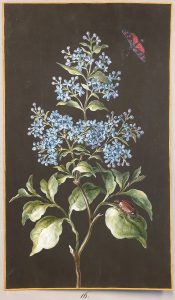
A butterfly and a cockchafer sitting on a lilac, Barbara Regina Dietzsch (1706-1783), paint on parchment, Museen der Stadt Nürnberg, Kunstsammlungen, Inv.-No. Norica 00267

Painting was one craft which was basically open to women. The regulations of the Flachmaler (flat painters), however, allowed only men to paint in oil on canvas. This effectively resulted in them receiving the more prestigious and lucrative orders. Women were restricted to smaller formats and techniques such as watercolours on paper.

55Baking gingerbread

Special moulds were used to shape gingerbread for baking. Traditionally, they were used to create specific shapes and decorations on particular occasions such as Christmas or weddings. The tradition of the Lebkuchen gingerbread was closely associated with Nuremberg's role as a great trade metropolis. The city's extensive trade network gave it early access to exotic spices. In addition to cinnamon, cardamom, and cloves, honey was another essential ingredient. Nuremberg was surrounded by forests, home to wild bees whose honey was gathered by the Zeidler beekeepers. Legally, the bees were the property of the emperor. As a result, the beekeepers came under imperial control.
The Nuremberg gingerbread tradition was closely linked to Nuremberg's position as a trading metropolis. Thanks to the large trading network, exotic spices could be imported early on. But in addition to cinnamon, cardamom and cloves, honey is also an important ingredient. Nuremberg was surrounded by forest. There were many wild bees buzzing in it, whose honey was harvested by the so-called Zeidlers in the Nuremberg area. The bees legally belonged to the emperor. That is why the Zeidlers were also under imperial control.
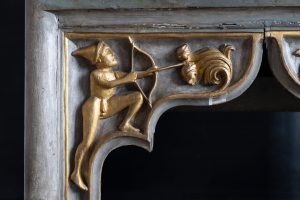
Depiction of a beekeeper, detail from the Imperial Throne in the Great Hall of the city hall, unknown artist, re-used older parts, Nuremberg around 1520, wood, painted, Museen der Stadt Nürnberg, Kunstsammlungen, Inv.-No. Pl 0752

This association is symbolized by the figure of a beekeeper (armed with a crossbow) shown on the panel below the seat of the imperial throne in the room titled "Der Kaiser und seine Stadt" (The emperor and his city)

Legally, the bees were the property of the emperor. As a result, the beekeepers came under imperial control. This association is symbolized by the figure of a beekeeper (armed with a crossbow) shown on the panel below the seat of the imperial throne in the room titled "Der Kaiser und seine Stadt" (The emperor and his city) The craft of the Lebküchner (gingerbread maker) only became regulated in 1643, before this date, it had been one of the Freie Künste, which were unregulated and had a lower status. This meant that the gingerbread was made by ordinary bakers.

CITY MUSEUM AT FEMBO-HAUS
MEDIA GUIDE

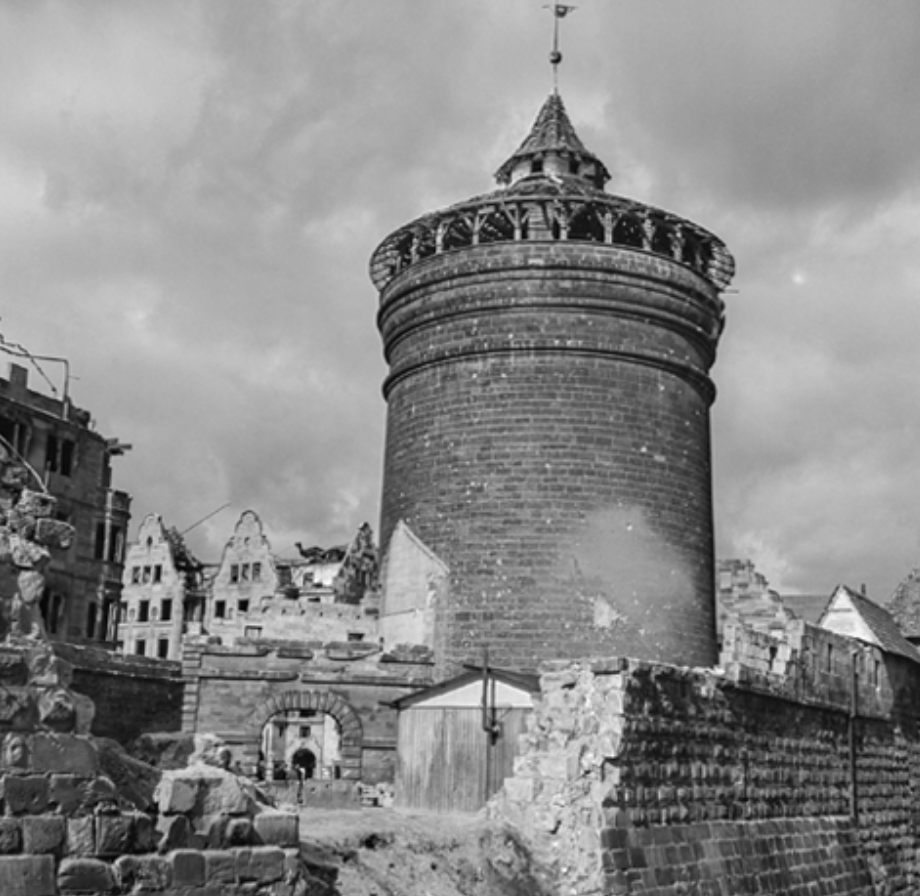
The Laufer Schlagturm, one of the few remaining towers of the penultimate city fortifications from the 13th century.

Hochbauamt
1955
Nuremberg City Archives
A38/N-13-19

The Tucher Castle in Hirschelgasse, the former summer residence of the Tucher patrician family from the 16th century.

Hochbauamt
1949
Nuremberg City Archives
A39/III-Fi-H-157

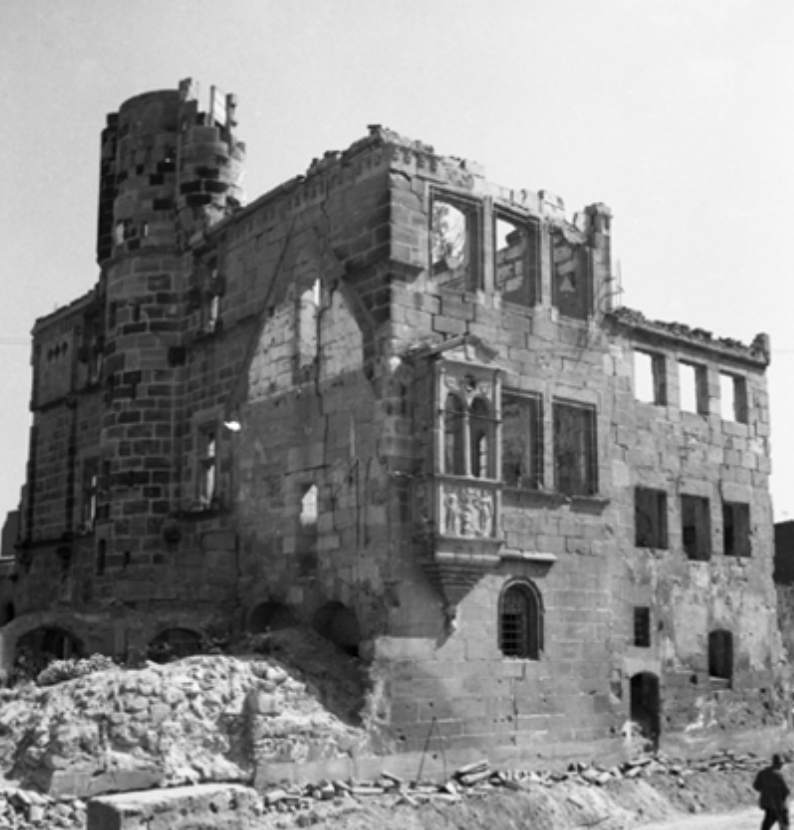
The Toplerhaus on Paniersplatz before its complete destruction, representative town house of the Topler patrician family from the late 16th century.

Staatliche Bildstelle Berlin
1935
Nuremberg City Archives
A44/C-6082-1

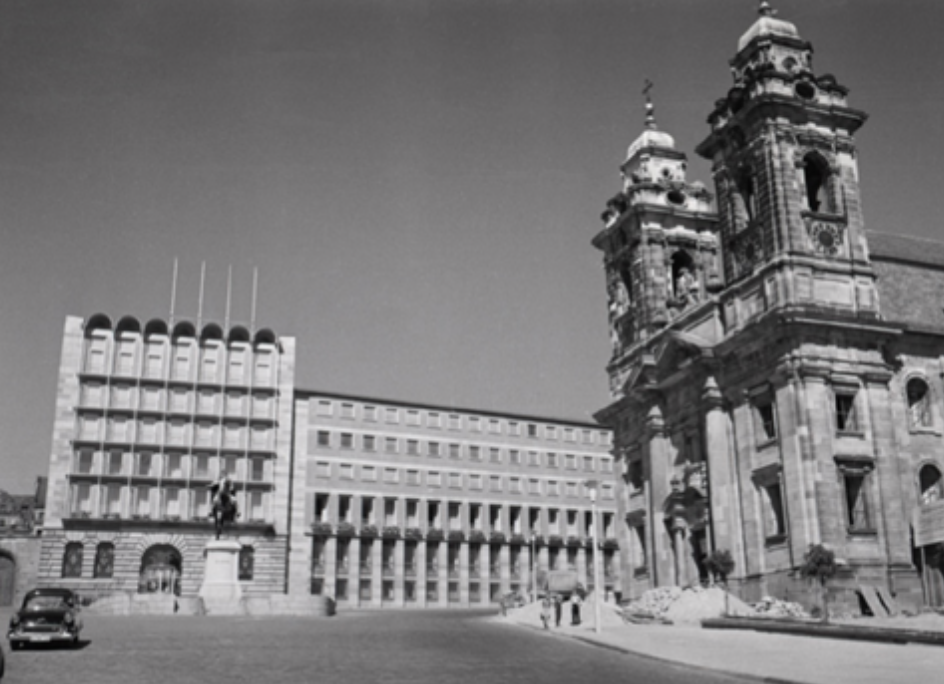
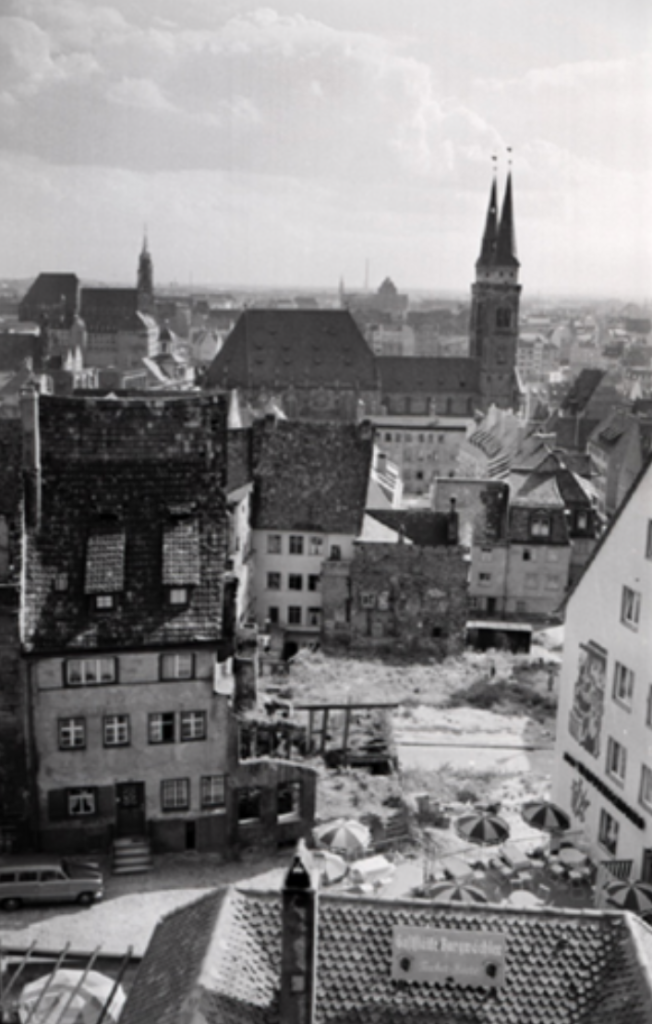
The Pellerhaus on Egidienplatz, originally a representative residential and commercial building in the Renaissance style, which was converted into a new building after 1945.

Armin Schmidt
1958
Nuremberg City Archives
A50/AS-253-2

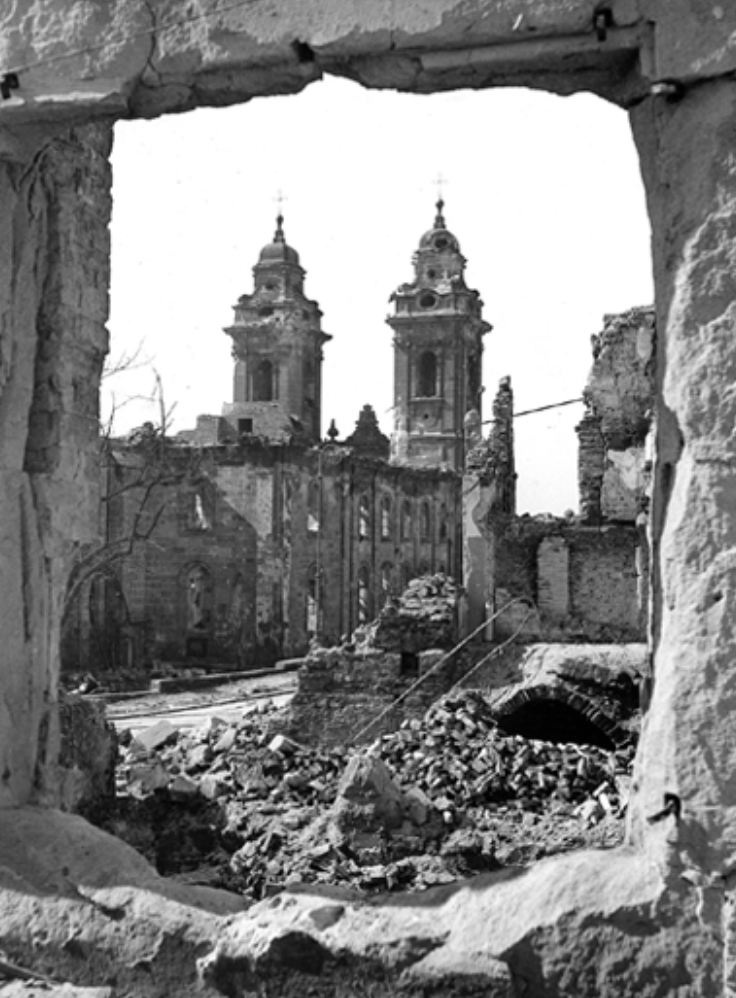
The Church of St. Egidien on Egidienplatz, the only baroque church building in Nuremberg from the early 18th century.

Unknown photographer
before 1945
Nuremberg City Archives
A76/RF-021-F1-5

The Laufertorturm, one of the four main towers of the last medieval city fortifications.

Lala Aufsberg
1953
Image archive photo Marburg
Aufnahme 760.878

The Tiergärtnertorturm, one of the four main towers of the last medieval city fortifications.

Hochbauamt
1954
Nuremberg City Archives
A41/Repro-100-08

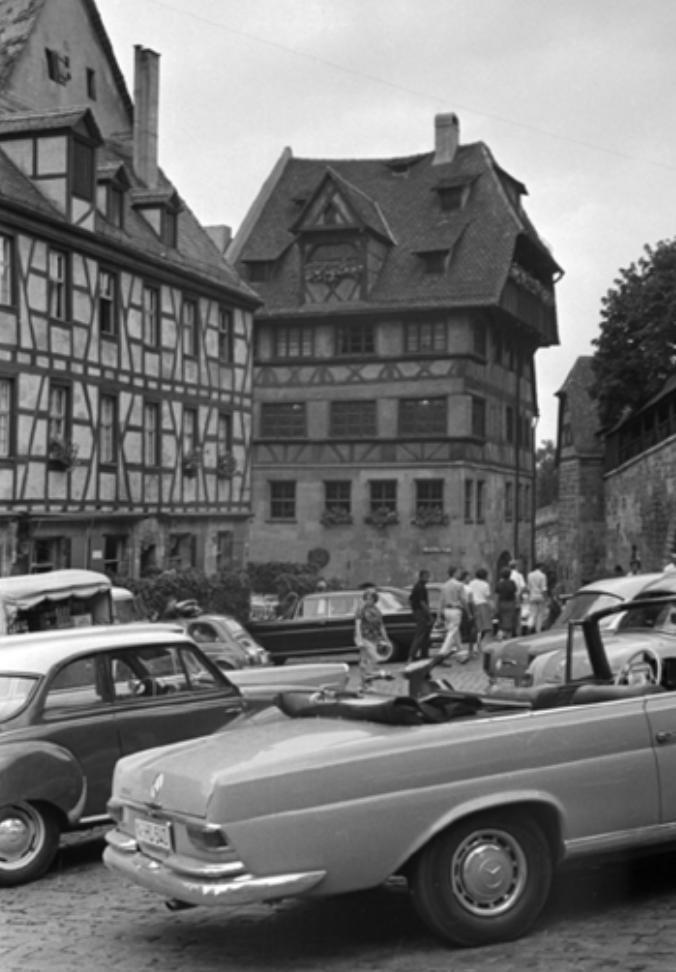
The Albrecht Dürer House on Albrecht Dürer Street, half-timbered building and former home of the important German artist from the 15th century.

Armin Schmidt
1950-1970
Nuremberg City Archives
A50/AS-600-41

Nuremberg Castle, the residence of the traveling kings and emperors of the Holy Roman Empire since the Middle Ages and the city's landmark.

Helga Schmidt-Glassner
1950-55
Image archive photo Marburg
Aufnahme 1.565.780

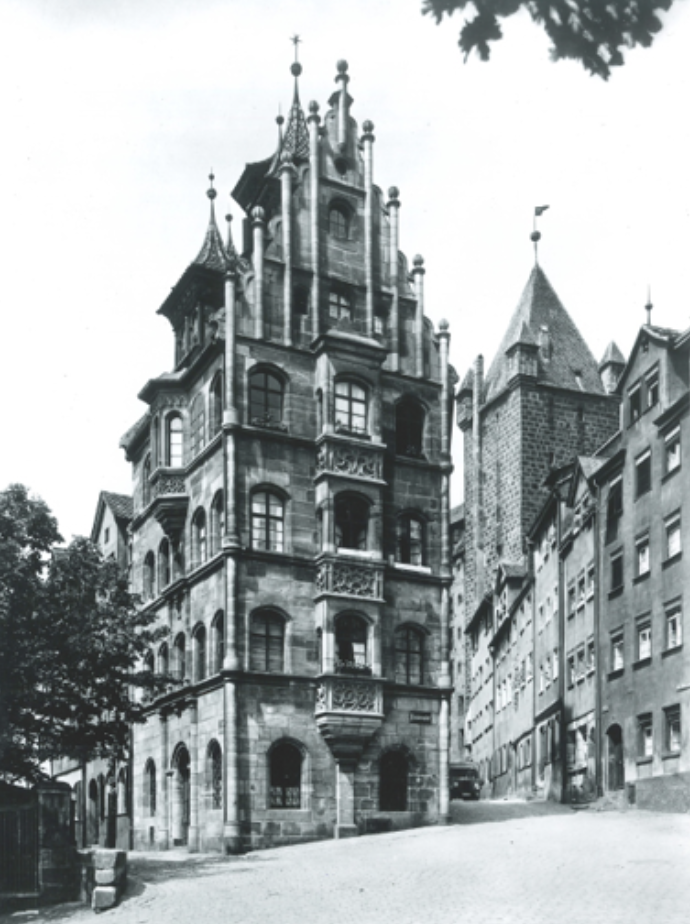
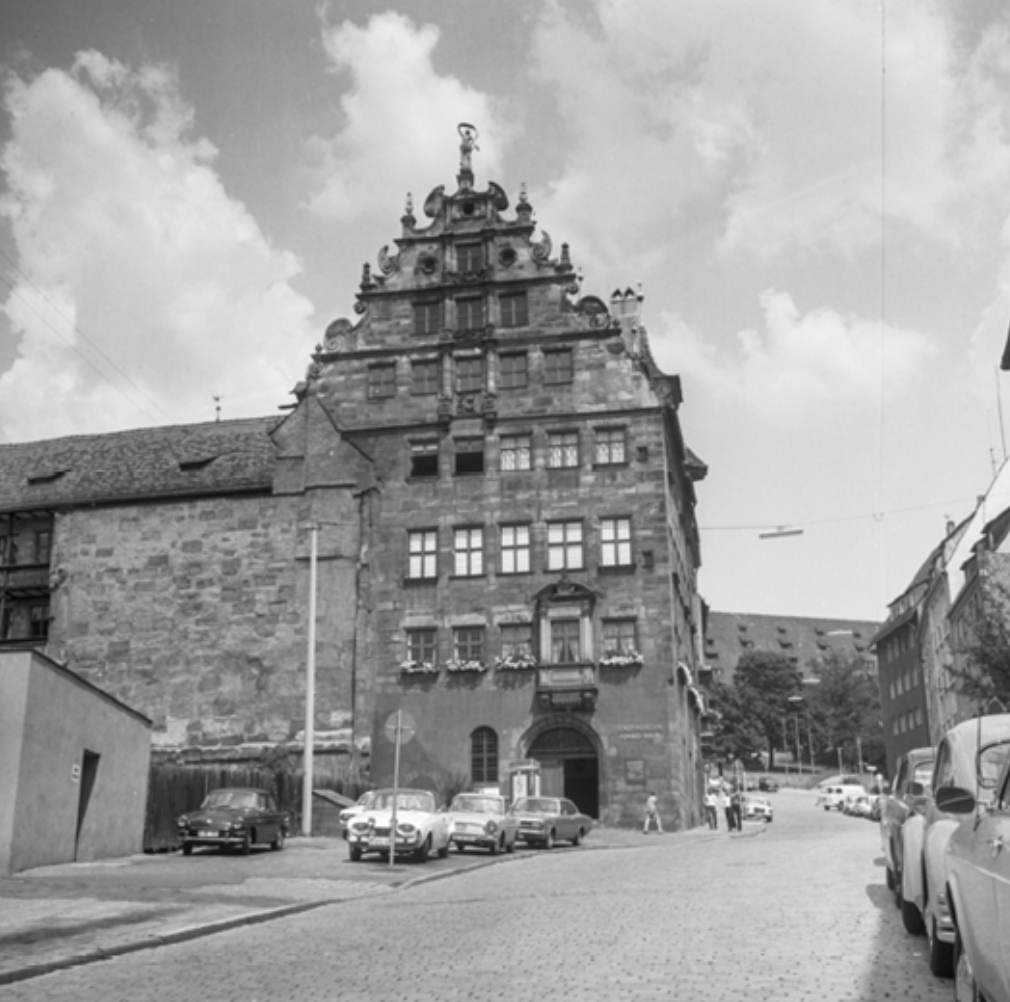
The Fembo House on Burgstrasse, the only surviving merchant's house from the late Renaissance.

Walter Schröder
1950-1970
Image archive photo Marburg
Aufnahme 908.033

The Sebalduskirche on Winklerstrasse, the oldest parish church in the city and burial place of the local saint Sebald.

Armin Schmidt
before 1945
Nuremberg City Archives
A50/AS-225-34a

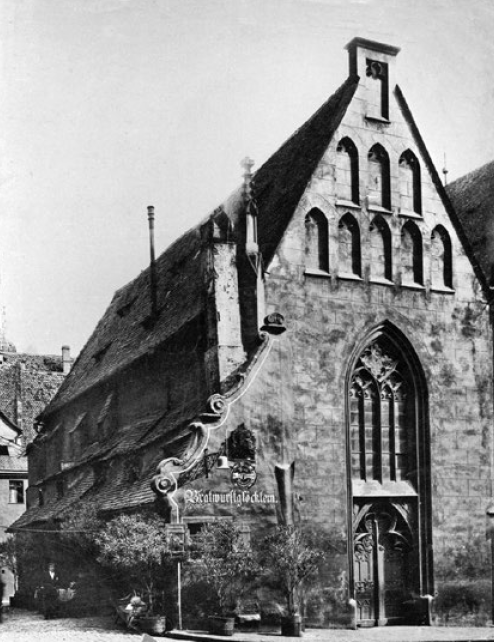
The Moritz Chapel at the Schürstabhaus before its destruction, small late medieval town church with a popular restaurant “Bratwurstglöcklein”.

Hochbauamt
before 1944
Nuremberg City Archives
A41/II-LR-727-14

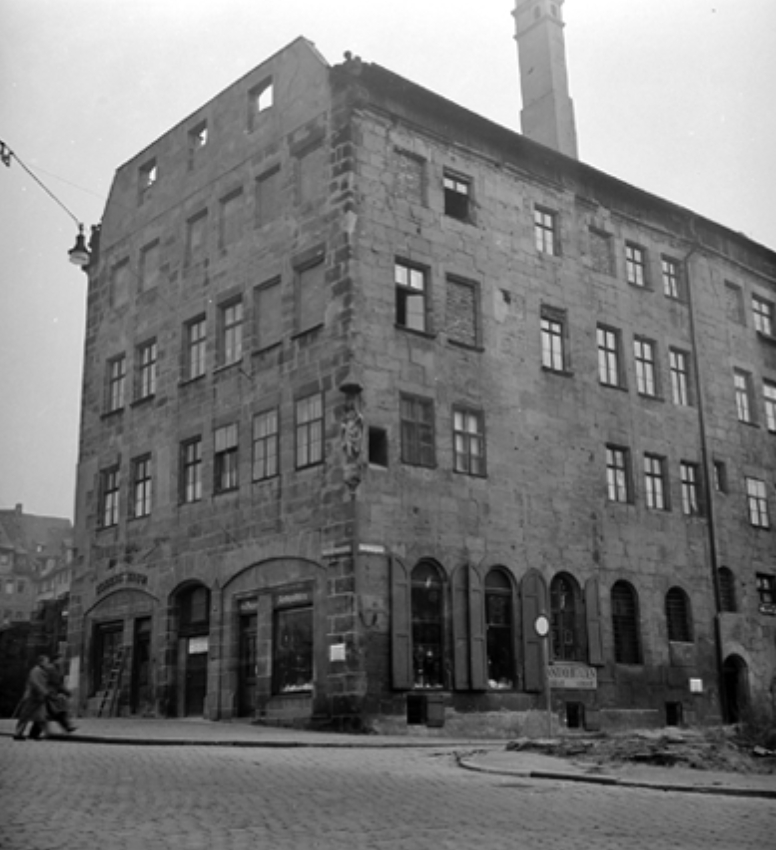
The Schürstabhaus on Albrecht-Dürer-Platz, residence of the patrician Schürstab family from the Gothic period.

Hochbauamt
1951
Nuremberg City Archives
A39/III-Fi-A-196

The town hall on the main market, an important Renaissance building by the architect Jakob Wolff the Elder. J. and seat of the Nuremberg Council in imperial city times.

Lala Aufsberg
1953
Image archive photo Marburg
Aufnahme 760.869

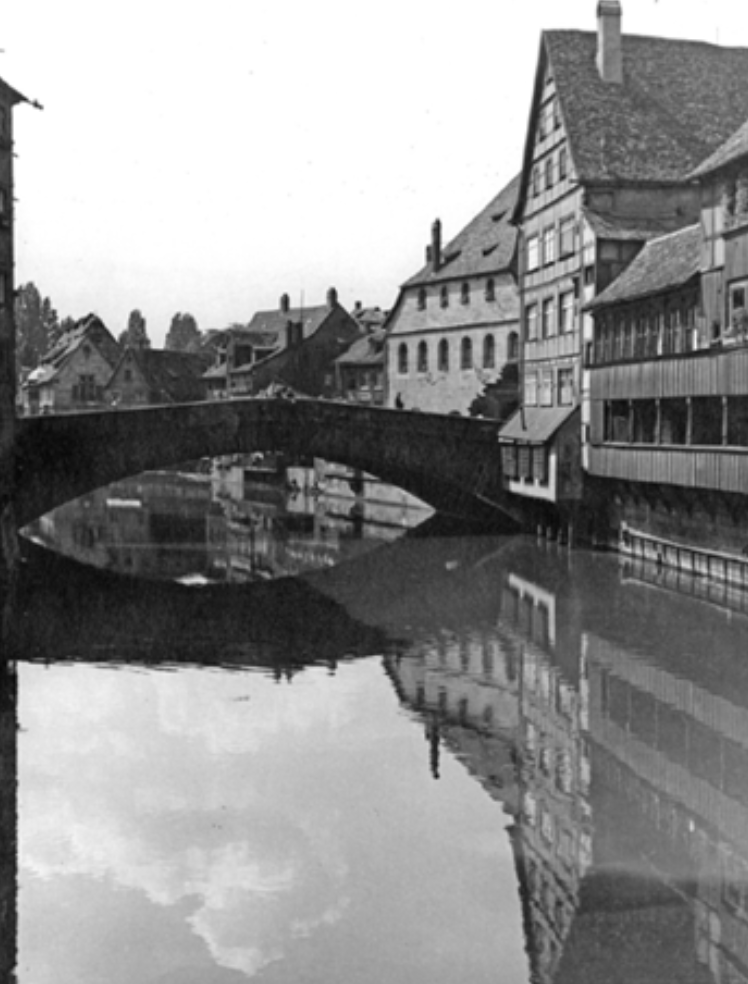
The Fronveste with Schlayerturm, river bridge of the last city fortifications on the Pegnitz outflow, which was used as a weapons depot and prison.

Armin Schmidt
1958
Nuremberg City Archives
A50/AS-230-32

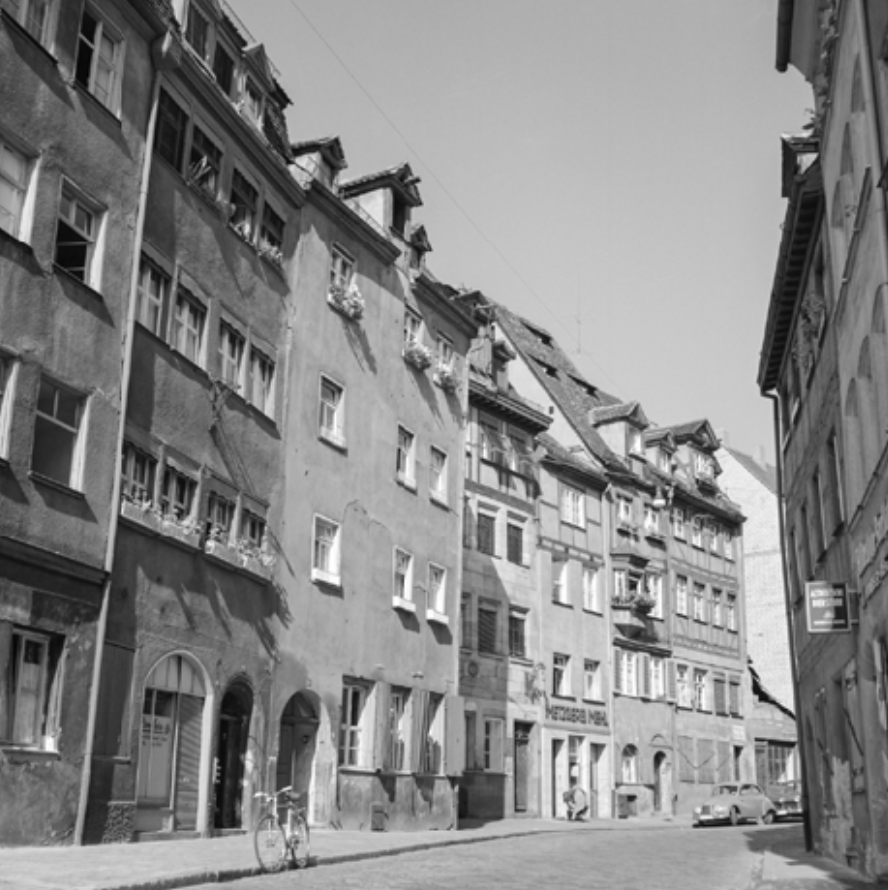
Weißgerbergasse, the craftsmen's quarter of Nuremberg's white tanners, before the uncovering of the medieval half-timbered facades.

Lala Aufsberg
1960
Image archive photo Marburg
Aufnahme 786.238

The Weinstadel at Maxplatz, the imperial city's wine warehouse and one of the largest half-timbered buildings in Germany.

Armin Schmidt
1959
Nuremberg City Archives
A50/AS-289-4

The executioner's house with executioner's footbridge at the flea market. Ensemble of the penultimate city fortifications from the 13th century and later residence of the Nuremberg executioner.

Hochbauamt
before 1945
Nuremberg City Archives
A39/III-Fi-K-1448

The Unschlitthaus on Obere Wörthstrasse, a large imperial city granary to supply the city's population and the seat of the Unschlittamt (office for further processing of beef tallow).

Hochbauamt Juli
1953
Nuremberg City Archives
A39/III-Fi-W-297

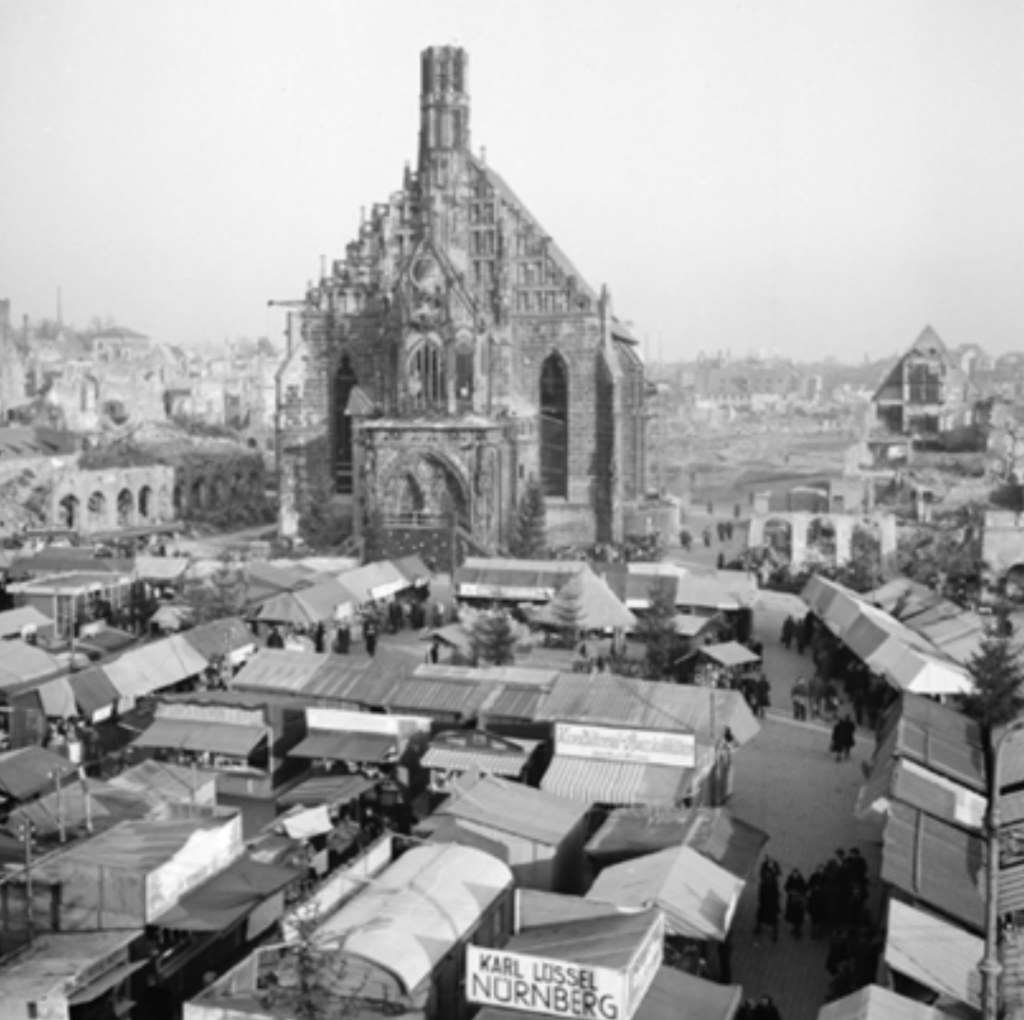
The Frauenkirche on the Hauptmarkt, built in the middle of the 14th century on the instructions of its founder, Emperor Charles IV, in the former Jewish quarter.

Hochbauamt
1948
Nuremberg City Archives
A39/I-182-D

The main market, since the Lorenz and Sebald halves were connected in the late Middle Ages, has been the center of the old town and market square in the former Jewish quarter.

Hochbauamt
1948
Nuremberg City Archives
A39/I-193-D

The Fleischbrücke, an important bridge structure of the German Renaissance and a central traffic junction in imperial city times.

Unknown photographer
1961
Nuremberg City Archives
A64/0101

The Holy Spirit Hospital in Spitalgasse, the largest social institution and most important civic foundation of the Middle Ages.

Armin Schmidt
before 1945
Nuremberg City Archives
A50/AS-600-11

The main synagogue on Hans-Sachs-Platz before its demolition in 1938, a monumental symbol of liberal-bourgeois Judaism in the 19th and early 20th centuries.

Unknown photographer
before 1938
Nuremberg City Archives
A76/RF-013-F1-1

The debt tower on the Vordere Insel Schütt, one of the few remaining towers of the penultimate city fortifications from the 13th century.

Armin Schmidt
1958
Nuremberg City Archives
A50/AS-253-5

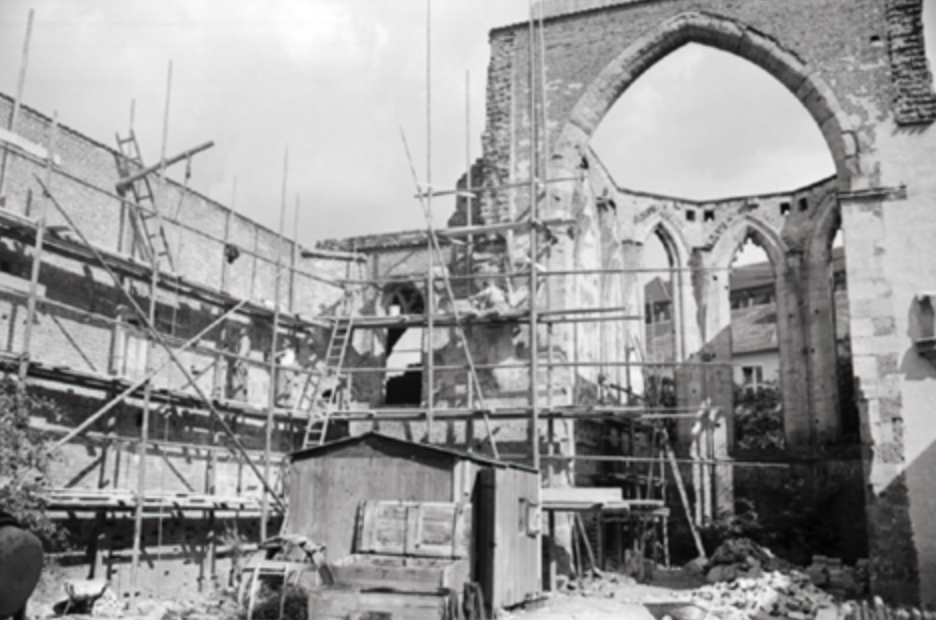
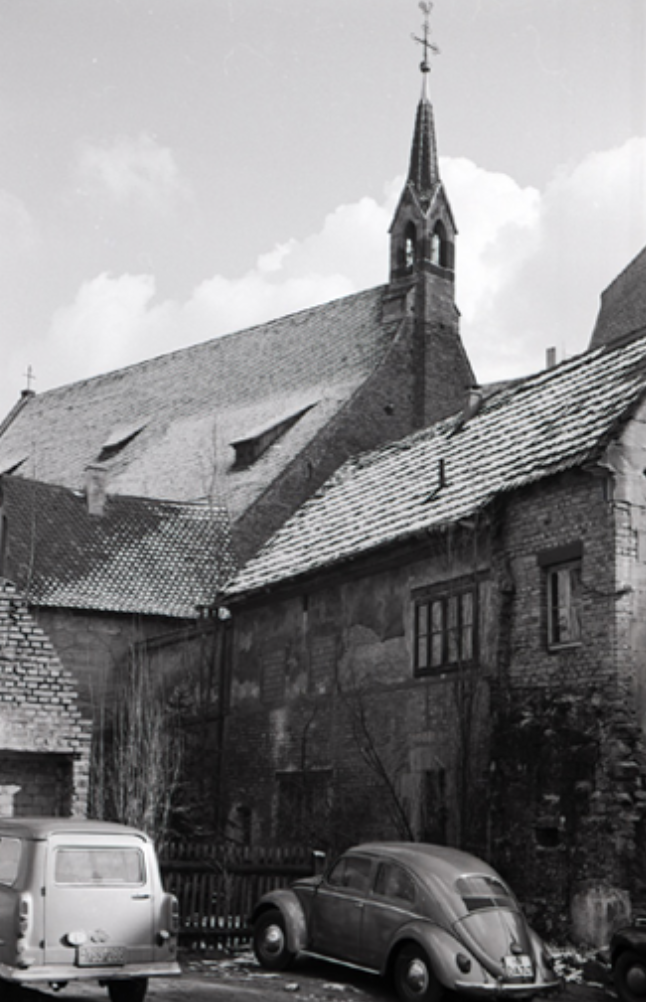
The Katharinenkirche at Katharinenkloster 6, before its destruction, former monastery church of the Dominican Sisters from the 13th century and seat of the Academy of Fine Arts in imperial city times.

Unknown photographer
before 1945
Nuremberg City Archives
A60/I-301

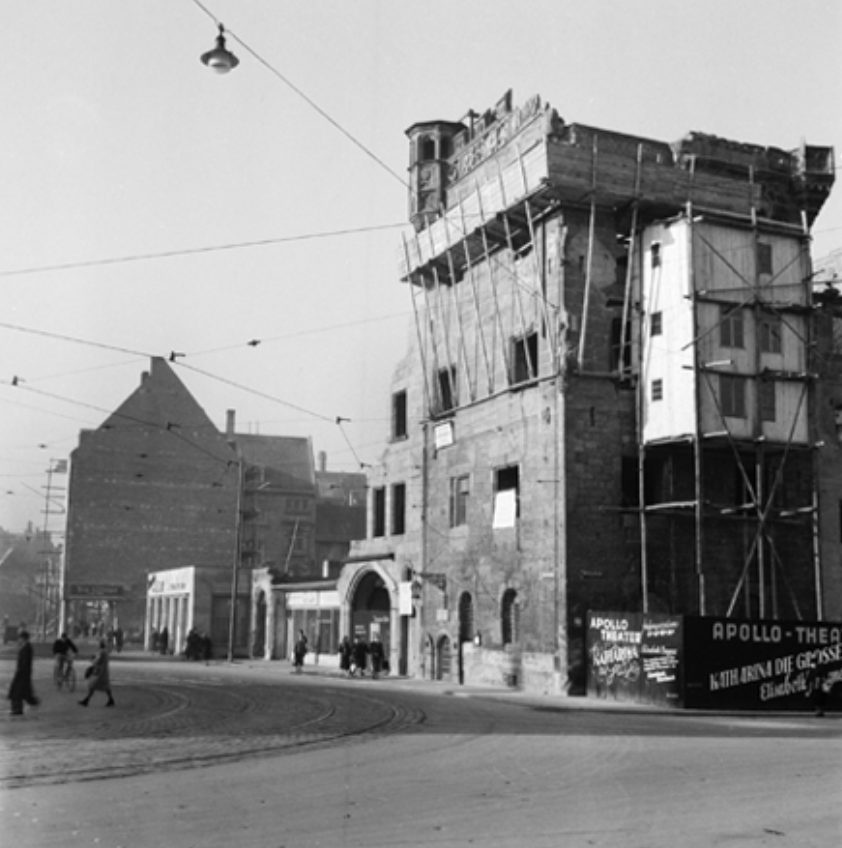
The Nassauer Haus on Karolinenstrasse, the only surviving medieval residential tower.

Hochbauamt
1950
Nuremberg City Archives
A39/III-Fi-K-230

The Lorenzkirche on Lorenzer Platz, one of the two large parish churches in the medieval city and a landmark of Nuremberg.

Unknown photographer
before 1945
Nuremberg City Archives
A76/RF-37-F2-34A

The Church of St. Jakob on Jakobsplatz, a Gothic church building from the 13th century and a stop for pilgrims on the Franconian Way of St. James.

Armin Schmidt
1958
Nuremberg City Archives
A50/AS-220-11

The toll hall at Hallplatz, a large imperial city granary to supply the city's population and the seat of the city's customs office.

Lala Aufsberg
1950-1960
Nuremberg City Archives
A62/LA-60703a

The Klarakirche on Königstrasse, former church of the Poor Clares monastery in Romanesque and early Gothic style.

Armin Schmidt
1958
Nuremberg City Archives
A50/AS-208-4

The Frauentorturm, one of the four main towers of the last medieval city fortifications.

Lala Aufsberg
1950
Image archive photo Marburg
Admission 737,400

The auditorium of the Academy of Fine Arts
photograph by Lukas Pürmayr

A well-guarded caravan of Nuremberg merchants,
Georg Kellner, 1910, mural on the facade
of the IHK building at Nuremberg, © IHK

Nelli Lunkenheimer costumed as the Christkind (Christmas Angel)
2023, © Marion Stephan
Adam and Eve
Albrecht Dürer,
1504,
copperplate engraving
Museen der Stadt Nürnberg,
Kunstsammlungen,
Inv.-Nr. Gr. A. 12779

Putto sculpture
Hesperidengärten (Gardens of the Hesperides)
© Mark Zimmermann

The Kaiserburg castle of Nuremberg,
photograph: Uwe Niklas

Nuremberg bratwurst (sausage)

Self-portrait of Albrecht Dürer,
copy after Dürer
Francisco Nuñez Losada (1889-1973),
1930, oil on wood
Museen der Stadt Nürnberg,
Kunstsammlungen,
Inv.-Nr. Gm 1094

Box-shaped pocket watch so-called Henlein-Uhr
Nürnberg, um 1510
Germanisches Nationalmuseum
Nürnberg,
Inv.-Nr. WI1265

View of the Christkindlesmarkt (Christmas Market) and the Church of Our Lady Frauenkirche
© Florian Trykowski

The imperial insignia and other precious objects, from a work called Leich-Be-Gängnisse
(Klebeband 16, Seite 91),
Stiftung des Fürstlichen Hauses Waldeck und Pyrmont,
Hofbibliothek,
Inv. Nr. FWHB Arolsen II 66e 130,
https://digi.ub-uniheidelberg.de/fwhb/klebeband16/0095G

The Schöner Brunnen fountain in Nuremberg
photograph, Museen der Stadt Nürnberg
Kunstsammlungen

The television tower at Nuremberg
commons

Glazed Elisenlebkuchen gingerbread with almonds
Lebkuchen-Schmidt GmbH & Co. KG
Photograph: Martin Ammon

The exhibition forum regularly hosts special exhibitions. These are not part of the media guide.

Unfortunately, the media guide only covers so far the newly designed storeys.