Medienguide Fembohaus

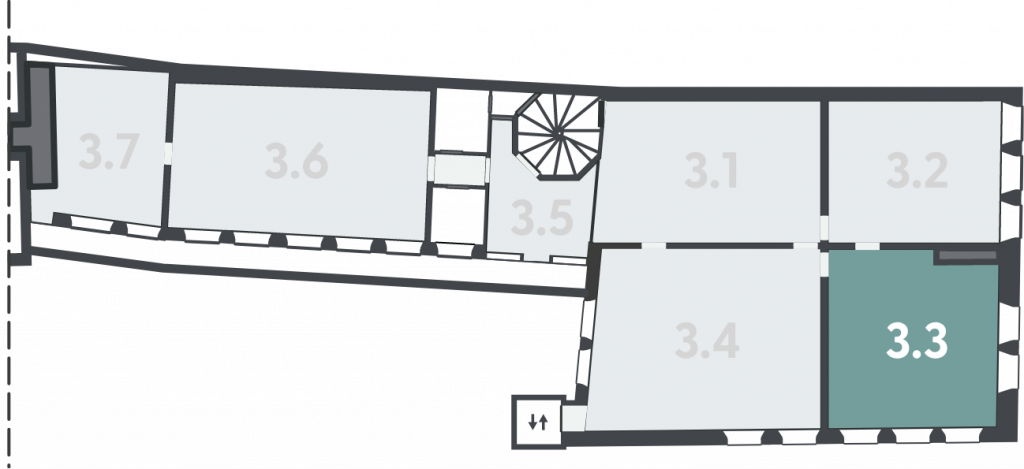
Please use the floor plan or the buttons below to select a room.

3.3 The city council and the city

11The city council, the patricians, and the era after 1806

The city council of Nuremberg was dominated by the patricians. This class included those families who held particular influence in Nuremberg.

In general, they had originated in the minor nobility. The council consisted of the select Small Council and the Greater Council, with the former constituting the actual governing body.

After an artisans' uprising in 1348/49, the Small Council was expanded by the admission of eight members. Each of these was deputed by one of the important crafts. These representatives held no real power, however, and were not allowed to vote.

The constitution of the city was only changed with the so-called Grundvertrag (fundamental accord) of 1794. The finances of the city were in disorder, and influential merchants were demanding participation in the city's government. As a result, the Larger Council gained more power. Merchants, craftsmen, scholars and civil servants now also had more influence in the city government.
The small Council was deprived of its powers in 1797, and ultimately replaced by an imperial commission which abolished the old structures of the free imperial period. From 1805, the governing body of the city was known as the Magistrate. It was composed of senators from both patrician and more humble backgrounds.
If you want to find out more about the city council of Nuremberg, please use the interactive media station in this room.

22Glas paintings from the Great Hall - Images of "Good Governance"

Nuremberg's city council employed art and artists as a means of publicising its self-perception. Already in pre-modern times, messages were transported not so much through texts but through pictures. Symbols and allegories were utilized as they were more readily understood by the illiterate majority. Many of these allegories need to be "translated" for the modern viewer, however.

If you look at the glass painting in the upper right hand corner, the first thing you'll notice is the coat of arms of the city of Nuremberg, a golden eagle with a human head on a field of blue (the so-called Jungfrauenadler). It is surmounted by a figure of Veritas (truth) reclining on a cloud. She is identified by the open book held in her hand. To the left of the armorial shield we find Justitia (justice), identified by her sword, and to the right, there is the allegory of peace, Pax (peace), recognisable by the leaf of an oil palm.
Using these symbols allowed the city council to proclaim what it stood for even to the illiterate masses: The book, sword, and palm leaf represented truth, justice, and peace. A strong government based on these principles was seen as essential for Nuremberg's economic prospering.
If you proceed to the next room, you will find out more about how Nuremberg evolved into a major centre of commerce.

CITY MUSEUM AT FEMBO-HAUS
MEDIA GUIDE

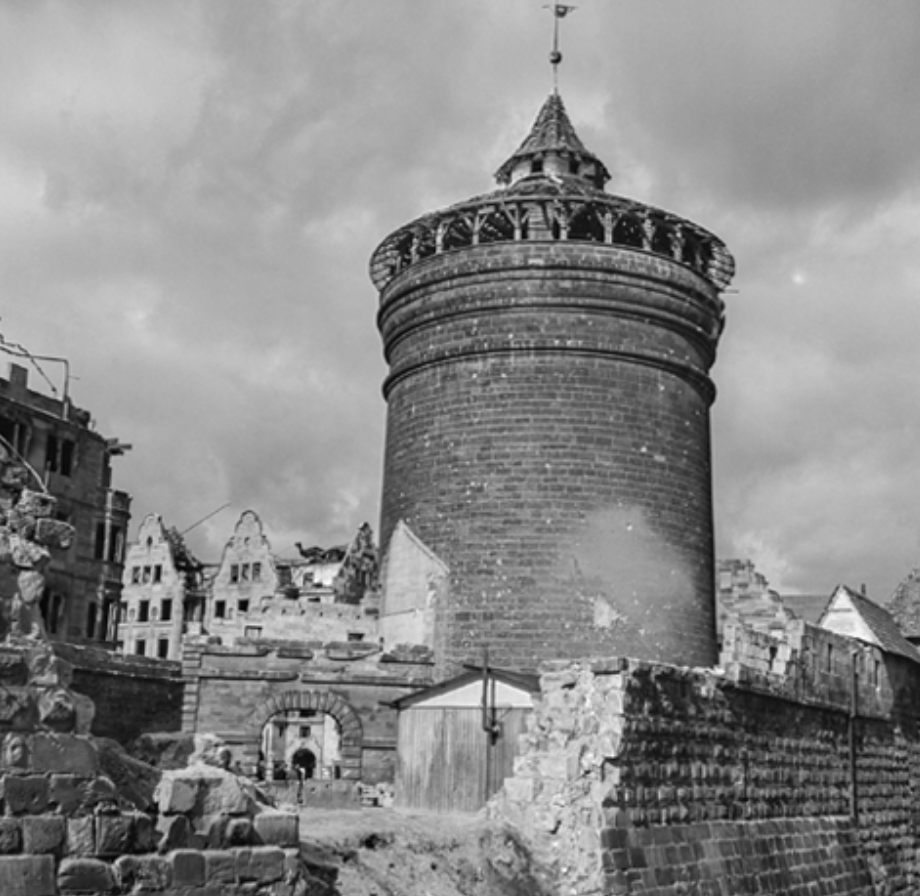
The Laufer Schlagturm, one of the few remaining towers of the penultimate city fortifications from the 13th century.

Hochbauamt
1955
Nuremberg City Archives
A38/N-13-19

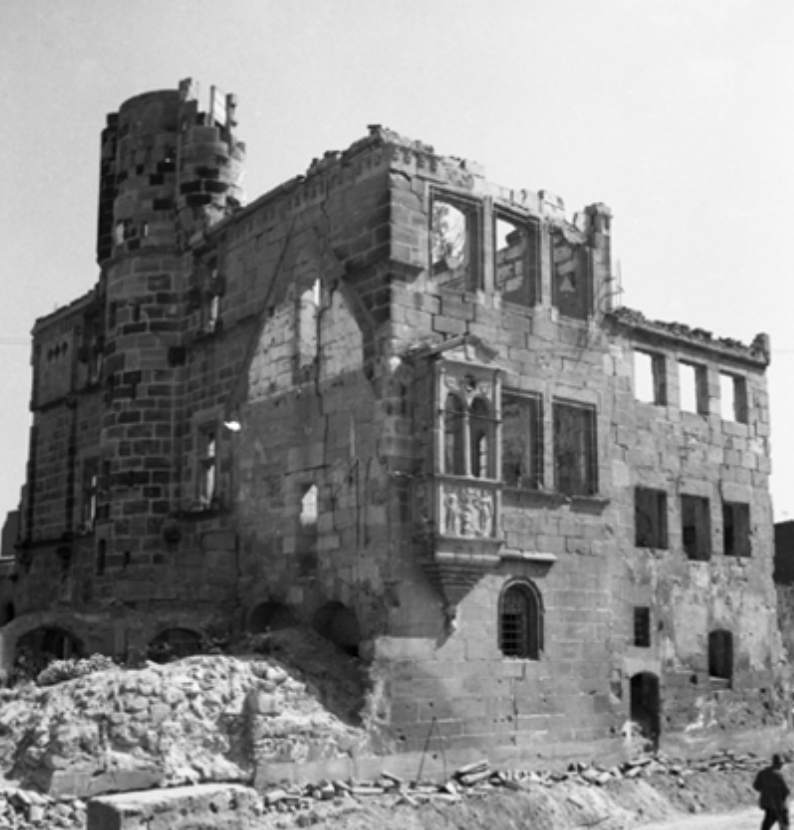
The Tucher Castle in Hirschelgasse, the former summer residence of the Tucher patrician family from the 16th century.

Hochbauamt
1949
Nuremberg City Archives
A39/III-Fi-H-157

The Toplerhaus on Paniersplatz before its complete destruction, representative town house of the Topler patrician family from the late 16th century.

Staatliche Bildstelle Berlin
1935
Nuremberg City Archives
A44/C-6082-1

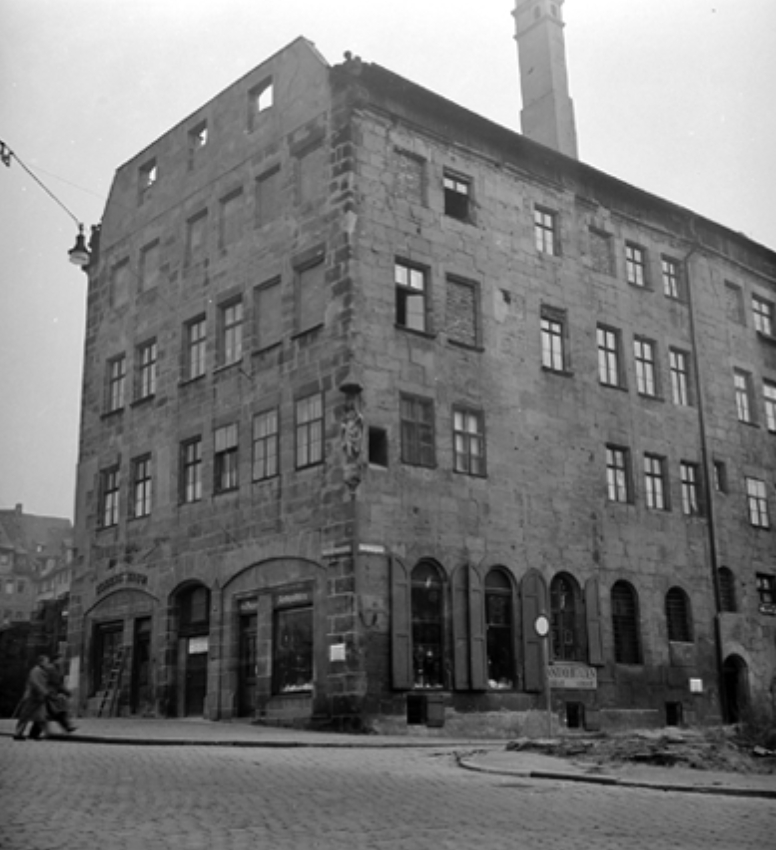
The Pellerhaus on Egidienplatz, originally a representative residential and commercial building in the Renaissance style, which was converted into a new building after 1945.

Armin Schmidt
1958
Nuremberg City Archives
A50/AS-253-2

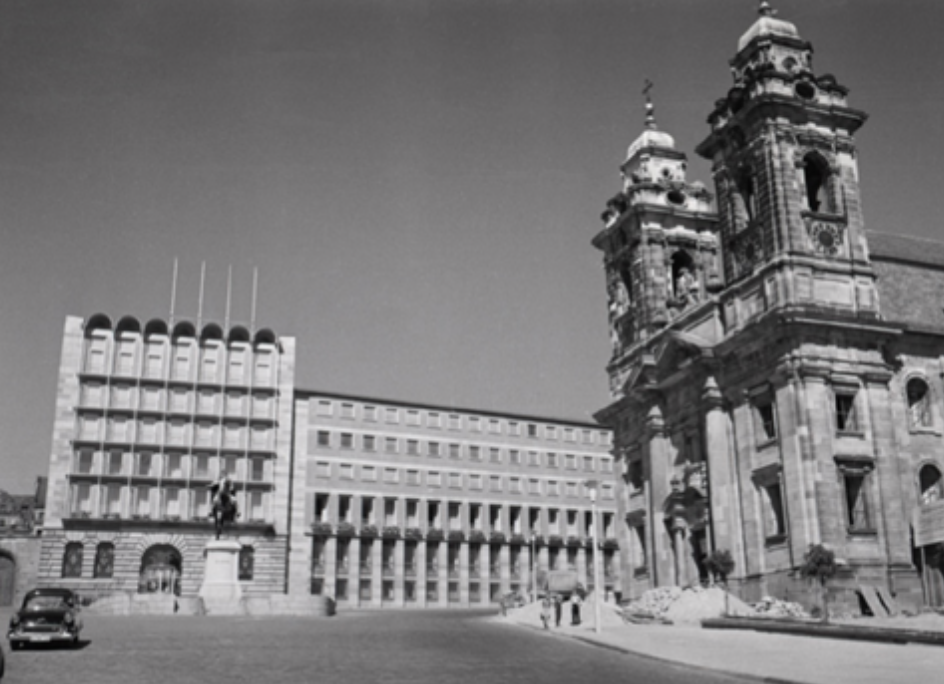
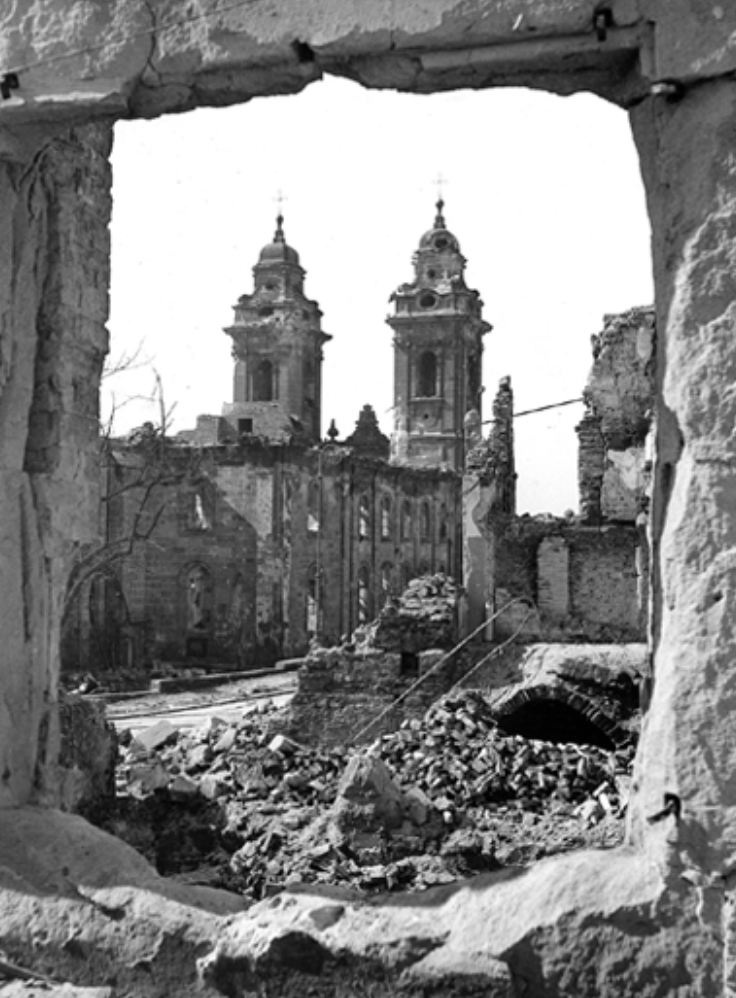
The Church of St. Egidien on Egidienplatz, the only baroque church building in Nuremberg from the early 18th century.

Unknown photographer
before 1945
Nuremberg City Archives
A76/RF-021-F1-5

The Laufertorturm, one of the four main towers of the last medieval city fortifications.

Lala Aufsberg
1953
Image archive photo Marburg
Aufnahme 760.878

The Tiergärtnertorturm, one of the four main towers of the last medieval city fortifications.

Hochbauamt
1954
Nuremberg City Archives
A41/Repro-100-08

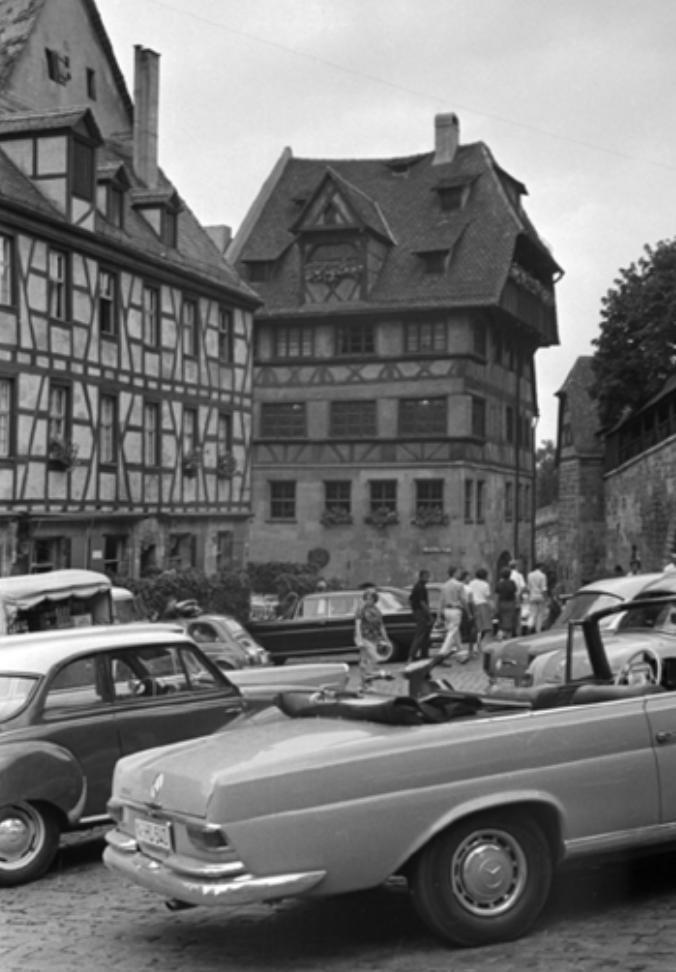
The Albrecht Dürer House on Albrecht Dürer Street, half-timbered building and former home of the important German artist from the 15th century.

Armin Schmidt
1950-1970
Nuremberg City Archives
A50/AS-600-41

Nuremberg Castle, the residence of the traveling kings and emperors of the Holy Roman Empire since the Middle Ages and the city's landmark.

Helga Schmidt-Glassner
1950-55
Image archive photo Marburg
Aufnahme 1.565.780

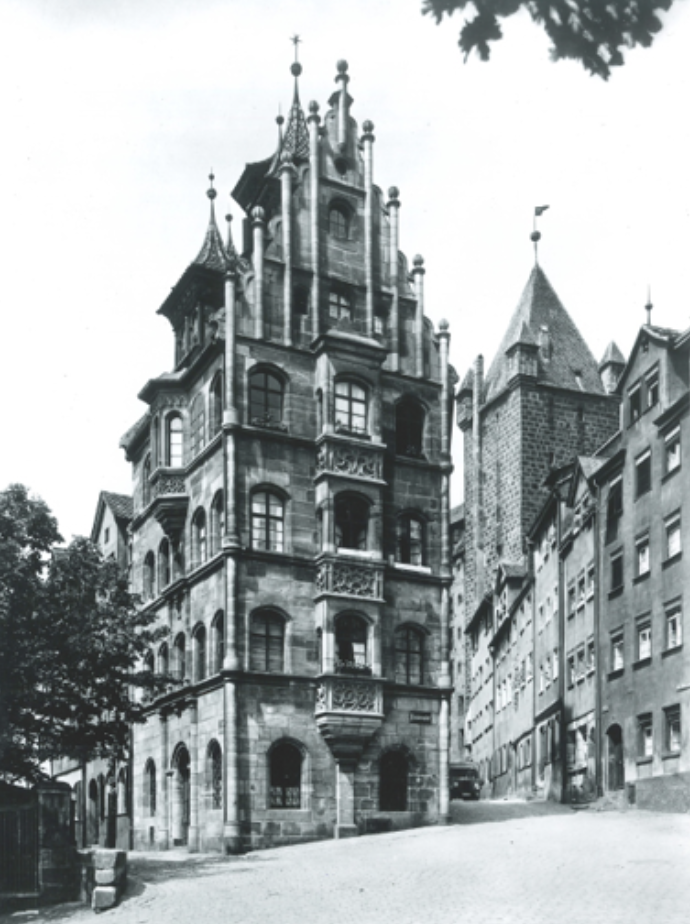
The Fembo House on Burgstrasse, the only surviving merchant's house from the late Renaissance.

Walter Schröder
1950-1970
Image archive photo Marburg
Aufnahme 908.033

The Sebalduskirche on Winklerstrasse, the oldest parish church in the city and burial place of the local saint Sebald.

Armin Schmidt
before 1945
Nuremberg City Archives
A50/AS-225-34a

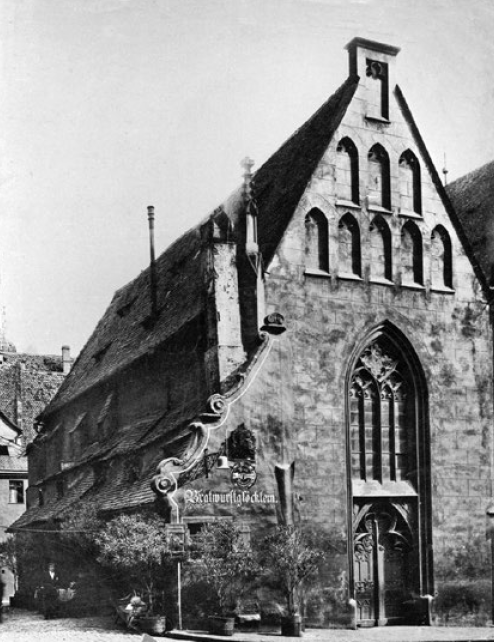
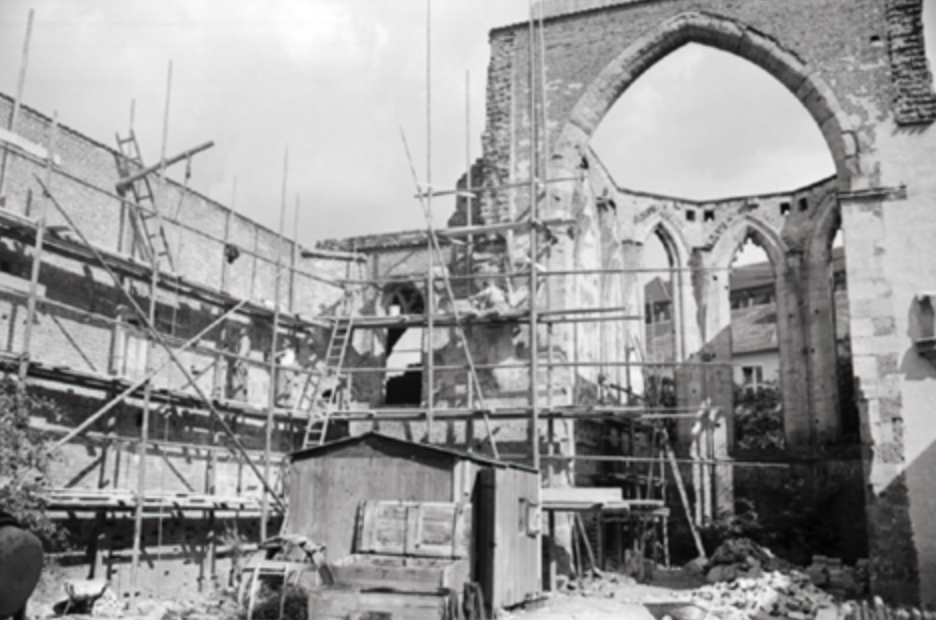
The Moritz Chapel at the Schürstabhaus before its destruction, small late medieval town church with a popular restaurant “Bratwurstglöcklein”.

Hochbauamt
before 1944
Nuremberg City Archives
A41/II-LR-727-14

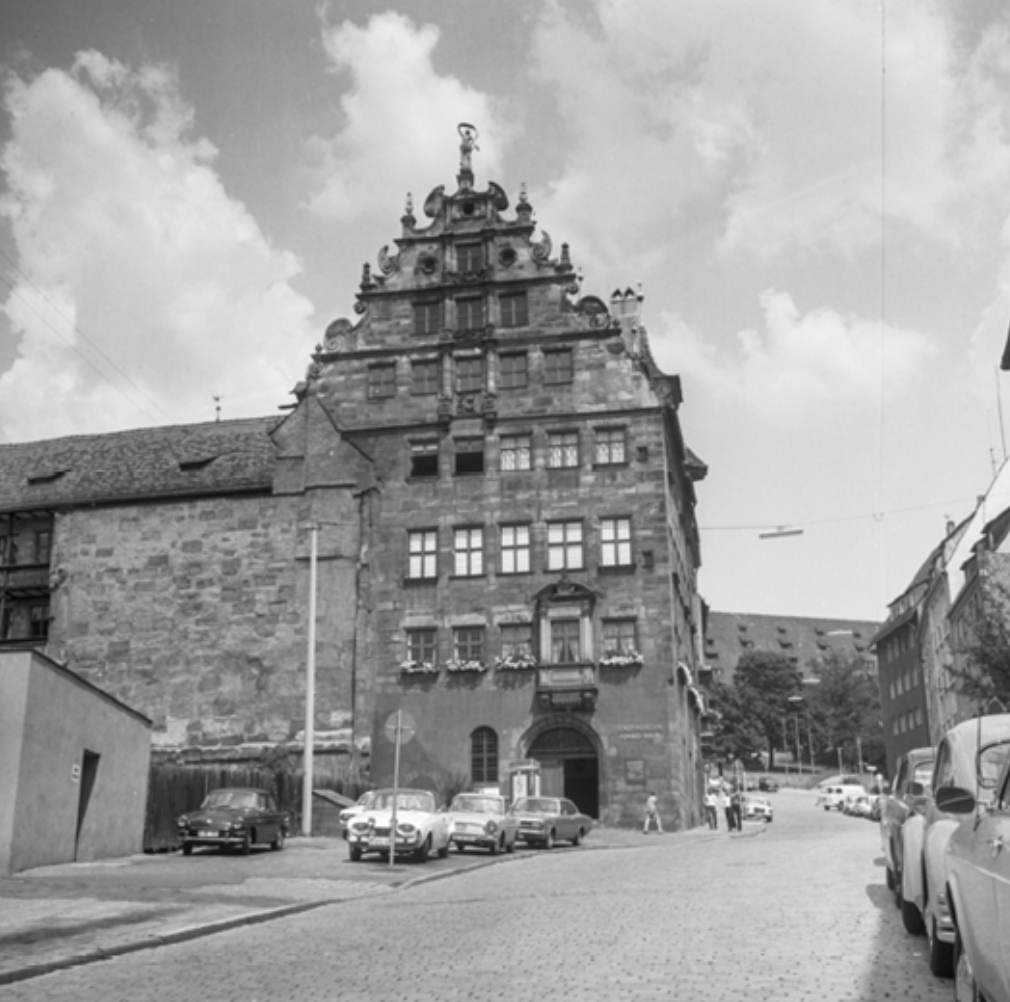
The Schürstabhaus on Albrecht-Dürer-Platz, residence of the patrician Schürstab family from the Gothic period.

Hochbauamt
1951
Nuremberg City Archives
A39/III-Fi-A-196

The town hall on the main market, an important Renaissance building by the architect Jakob Wolff the Elder. J. and seat of the Nuremberg Council in imperial city times.

Lala Aufsberg
1953
Image archive photo Marburg
Aufnahme 760.869

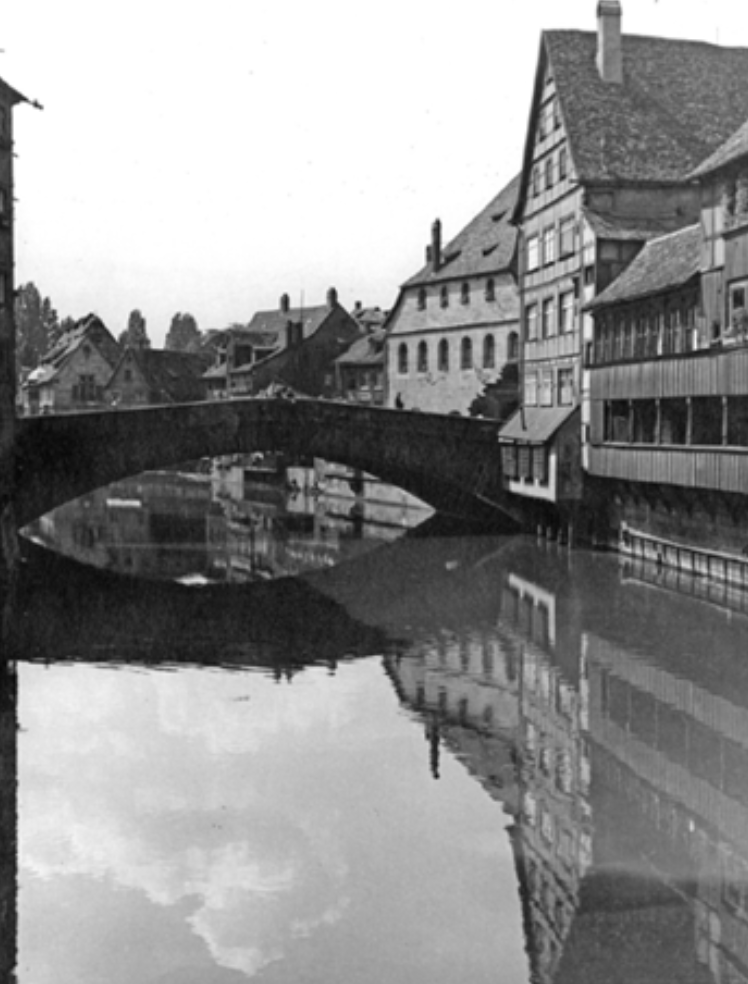
The Fronveste with Schlayerturm, river bridge of the last city fortifications on the Pegnitz outflow, which was used as a weapons depot and prison.

Armin Schmidt
1958
Nuremberg City Archives
A50/AS-230-32

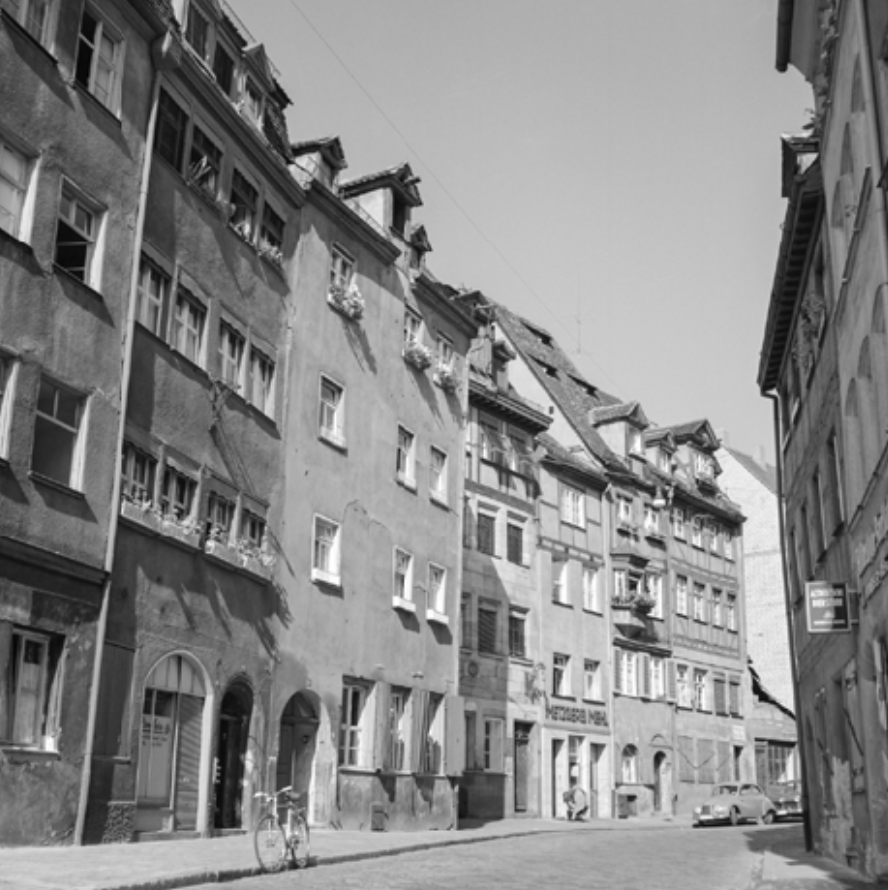
Weißgerbergasse, the craftsmen's quarter of Nuremberg's white tanners, before the uncovering of the medieval half-timbered facades.

Lala Aufsberg
1960
Image archive photo Marburg
Aufnahme 786.238

The Weinstadel at Maxplatz, the imperial city's wine warehouse and one of the largest half-timbered buildings in Germany.

Armin Schmidt
1959
Nuremberg City Archives
A50/AS-289-4

The executioner's house with executioner's footbridge at the flea market. Ensemble of the penultimate city fortifications from the 13th century and later residence of the Nuremberg executioner.

Hochbauamt
before 1945
Nuremberg City Archives
A39/III-Fi-K-1448

The Unschlitthaus on Obere Wörthstrasse, a large imperial city granary to supply the city's population and the seat of the Unschlittamt (office for further processing of beef tallow).

Hochbauamt Juli
1953
Nuremberg City Archives
A39/III-Fi-W-297

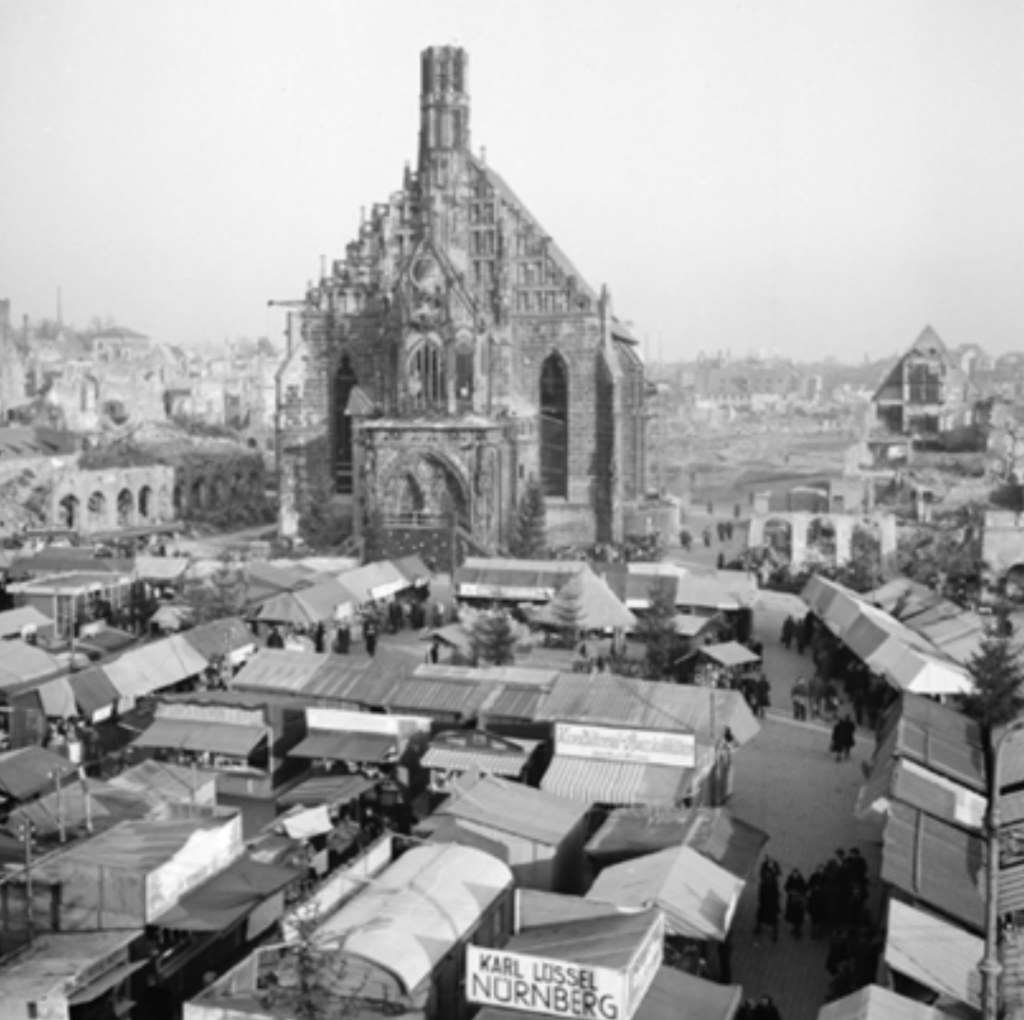
The Frauenkirche on the Hauptmarkt, built in the middle of the 14th century on the instructions of its founder, Emperor Charles IV, in the former Jewish quarter.

Hochbauamt
1948
Nuremberg City Archives
A39/I-182-D

The main market, since the Lorenz and Sebald halves were connected in the late Middle Ages, has been the center of the old town and market square in the former Jewish quarter.

Hochbauamt
1948
Nuremberg City Archives
A39/I-193-D

The Fleischbrücke, an important bridge structure of the German Renaissance and a central traffic junction in imperial city times.

Unknown photographer
1961
Nuremberg City Archives
A64/0101

The Holy Spirit Hospital in Spitalgasse, the largest social institution and most important civic foundation of the Middle Ages.

Armin Schmidt
before 1945
Nuremberg City Archives
A50/AS-600-11

The main synagogue on Hans-Sachs-Platz before its demolition in 1938, a monumental symbol of liberal-bourgeois Judaism in the 19th and early 20th centuries.

Unknown photographer
before 1938
Nuremberg City Archives
A76/RF-013-F1-1

The debt tower on the Vordere Insel Schütt, one of the few remaining towers of the penultimate city fortifications from the 13th century.

Armin Schmidt
1958
Nuremberg City Archives
A50/AS-253-5

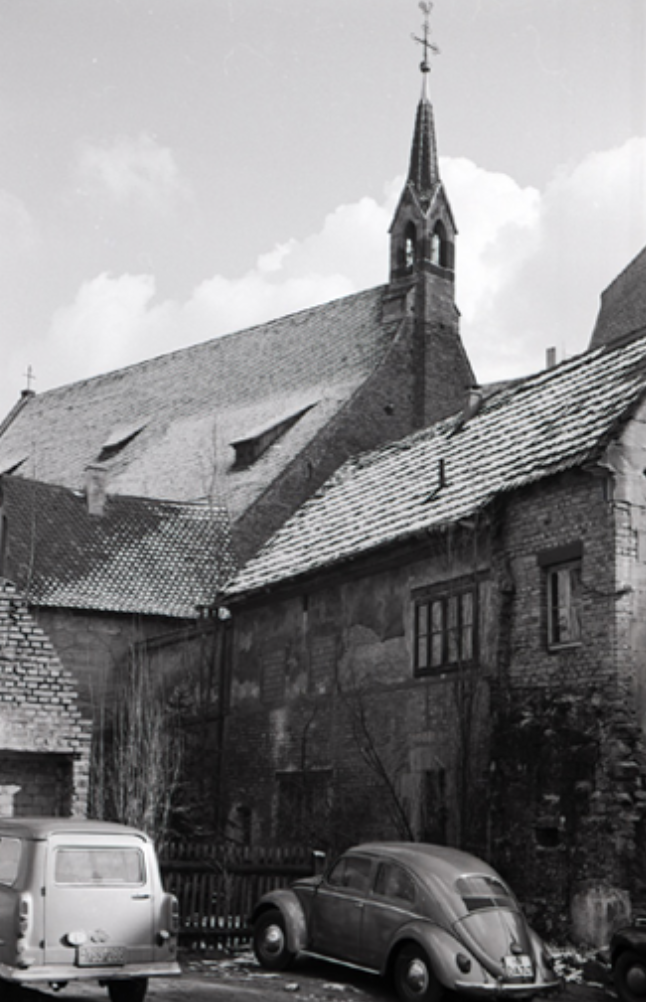
The Katharinenkirche at Katharinenkloster 6, before its destruction, former monastery church of the Dominican Sisters from the 13th century and seat of the Academy of Fine Arts in imperial city times.

Unknown photographer
before 1945
Nuremberg City Archives
A60/I-301

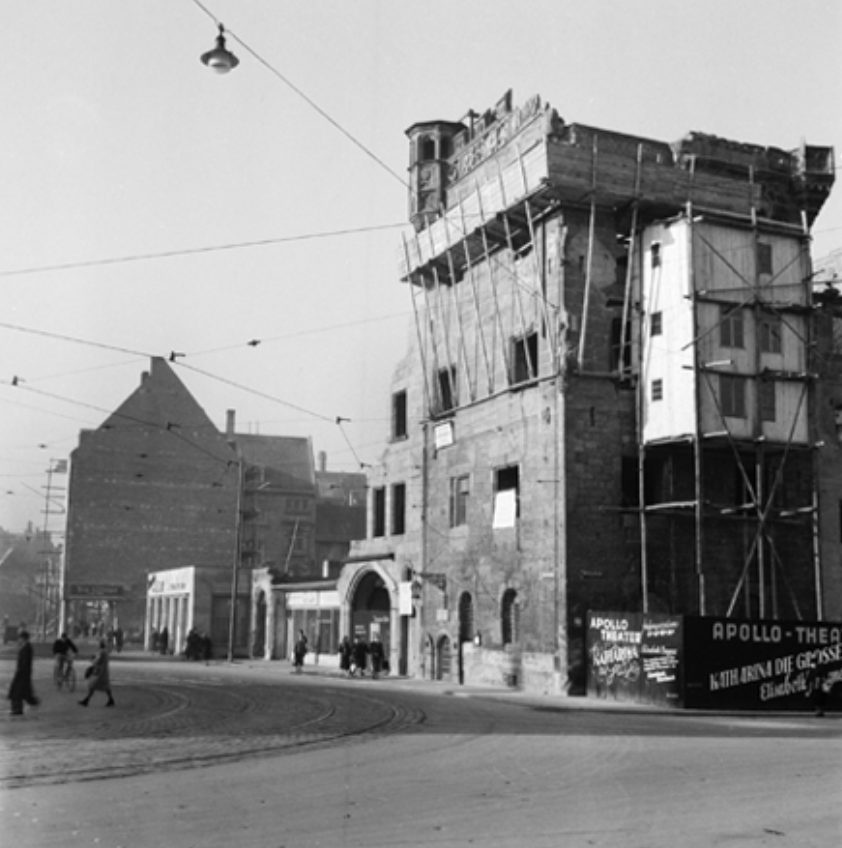
The Nassauer Haus on Karolinenstrasse, the only surviving medieval residential tower.

Hochbauamt
1950
Nuremberg City Archives
A39/III-Fi-K-230

The Lorenzkirche on Lorenzer Platz, one of the two large parish churches in the medieval city and a landmark of Nuremberg.

Unknown photographer
before 1945
Nuremberg City Archives
A76/RF-37-F2-34A

The Church of St. Jakob on Jakobsplatz, a Gothic church building from the 13th century and a stop for pilgrims on the Franconian Way of St. James.

Armin Schmidt
1958
Nuremberg City Archives
A50/AS-220-11

The toll hall at Hallplatz, a large imperial city granary to supply the city's population and the seat of the city's customs office.

Lala Aufsberg
1950-1960
Nuremberg City Archives
A62/LA-60703a

The Klarakirche on Königstrasse, former church of the Poor Clares monastery in Romanesque and early Gothic style.

Armin Schmidt
1958
Nuremberg City Archives
A50/AS-208-4

The Frauentorturm, one of the four main towers of the last medieval city fortifications.

Lala Aufsberg
1950
Image archive photo Marburg
Admission 737,400

The auditorium of the Academy of Fine Arts
photograph by Lukas Pürmayr

A well-guarded caravan of Nuremberg merchants,
Georg Kellner, 1910, mural on the facade
of the IHK building at Nuremberg, © IHK

Nelli Lunkenheimer costumed as the Christkind (Christmas Angel)
2023, © Marion Stephan
Adam and Eve
Albrecht Dürer,
1504,
copperplate engraving
Museen der Stadt Nürnberg,
Kunstsammlungen,
Inv.-Nr. Gr. A. 12779

Putto sculpture
Hesperidengärten (Gardens of the Hesperides)
© Mark Zimmermann

The Kaiserburg castle of Nuremberg,
photograph: Uwe Niklas

Nuremberg bratwurst (sausage)

Self-portrait of Albrecht Dürer,
copy after Dürer
Francisco Nuñez Losada (1889-1973),
1930, oil on wood
Museen der Stadt Nürnberg,
Kunstsammlungen,
Inv.-Nr. Gm 1094

Box-shaped pocket watch so-called Henlein-Uhr
Nürnberg, um 1510
Germanisches Nationalmuseum
Nürnberg,
Inv.-Nr. WI1265

View of the Christkindlesmarkt (Christmas Market) and the Church of Our Lady Frauenkirche
© Florian Trykowski

The imperial insignia and other precious objects, from a work called Leich-Be-Gängnisse
(Klebeband 16, Seite 91),
Stiftung des Fürstlichen Hauses Waldeck und Pyrmont,
Hofbibliothek,
Inv. Nr. FWHB Arolsen II 66e 130,
https://digi.ub-uniheidelberg.de/fwhb/klebeband16/0095G

The Schöner Brunnen fountain in Nuremberg
photograph, Museen der Stadt Nürnberg
Kunstsammlungen

The television tower at Nuremberg
commons

Glazed Elisenlebkuchen gingerbread with almonds
Lebkuchen-Schmidt GmbH & Co. KG
Photograph: Martin Ammon

The exhibition forum regularly hosts special exhibitions. These are not part of the media guide.

Unfortunately, the media guide only covers so far the newly designed storeys.