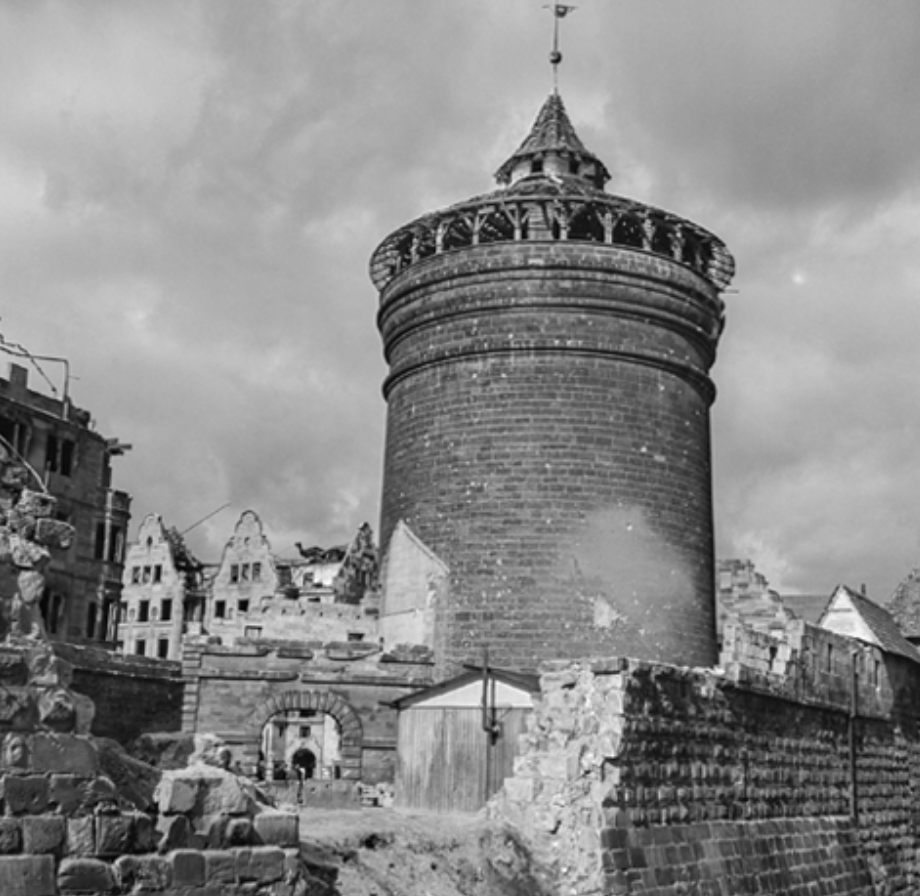
The Laufer Schlagturm, one of the few remaining towers of the penultimate city fortifications from the 13th century.
Hochbauamt 1955 Nuremberg City Archives A38/N-13-19
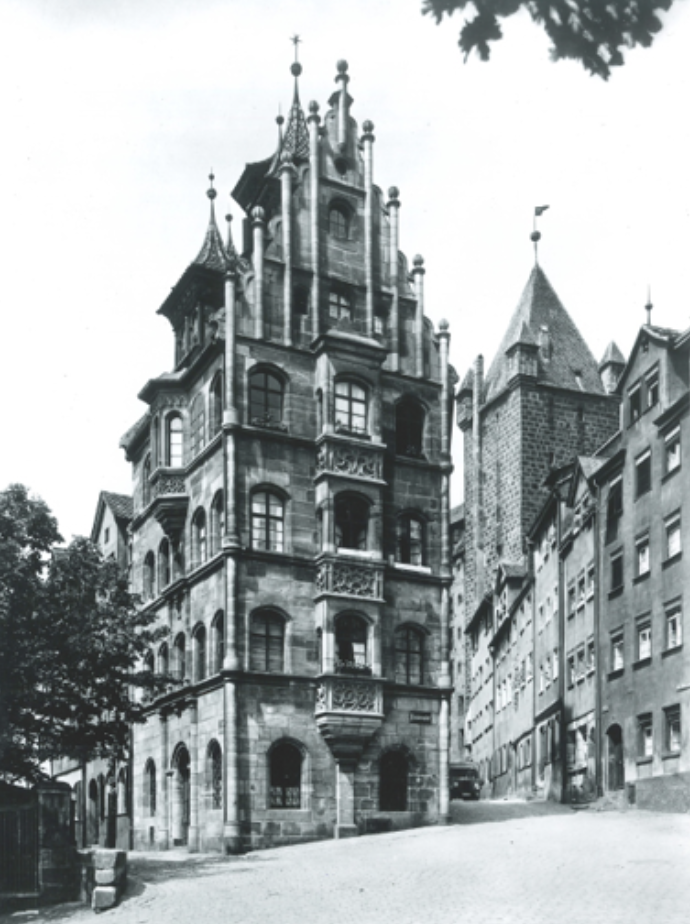
The Tucher Castle in Hirschelgasse, the former summer residence of the Tucher patrician family from the 16th century.
Hochbauamt 1949 Nuremberg City Archives A39/III-Fi-H-157
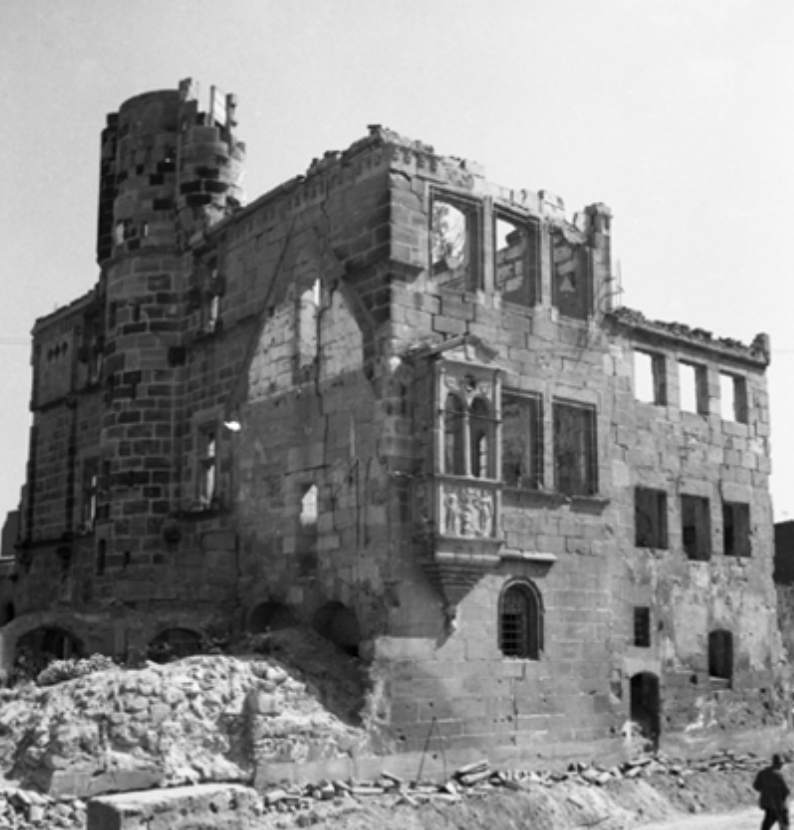
The Toplerhaus on Paniersplatz before its complete destruction, representative town house of the Topler patrician family from the late 16th century.
Staatliche Bildstelle Berlin 1935 Nuremberg City Archives A44/C-6082-1
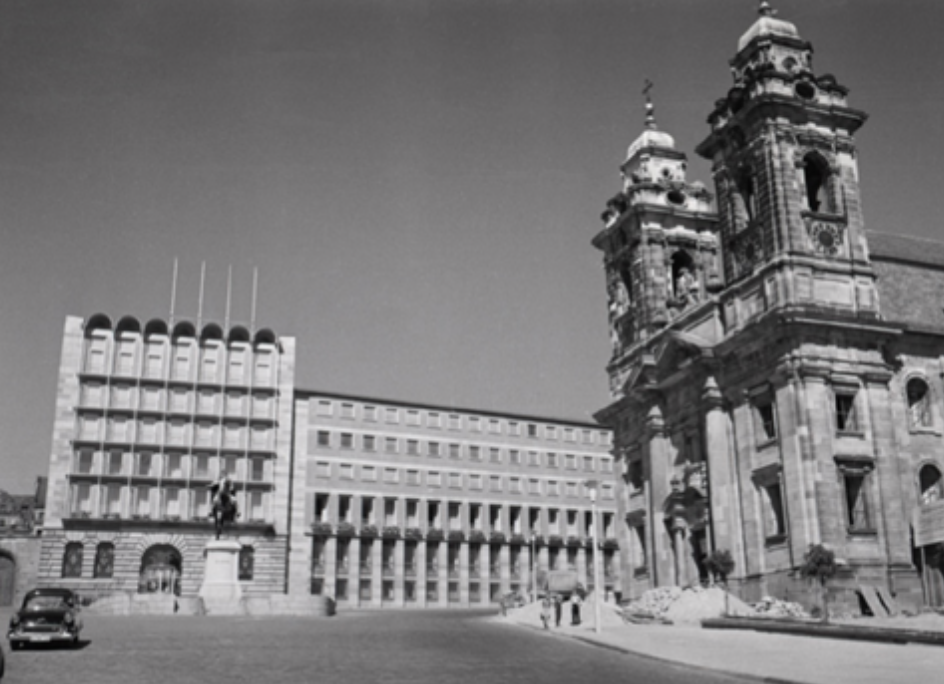
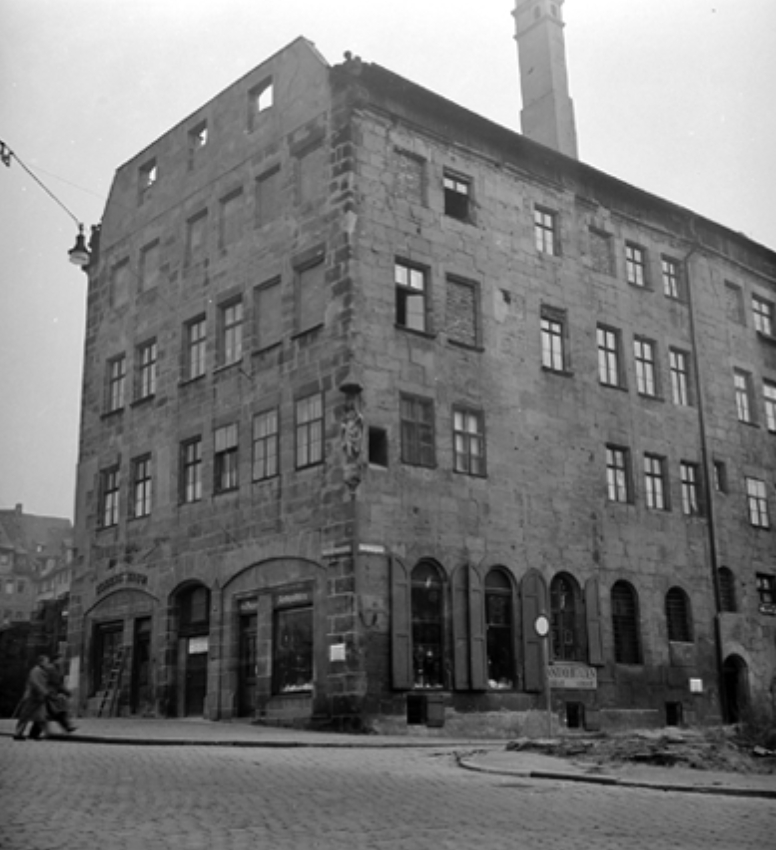
The Pellerhaus on Egidienplatz, originally a representative residential and commercial building in the Renaissance style, which was converted into a new building after 1945.
Armin Schmidt 1958 Nuremberg City Archives A50/AS-253-2
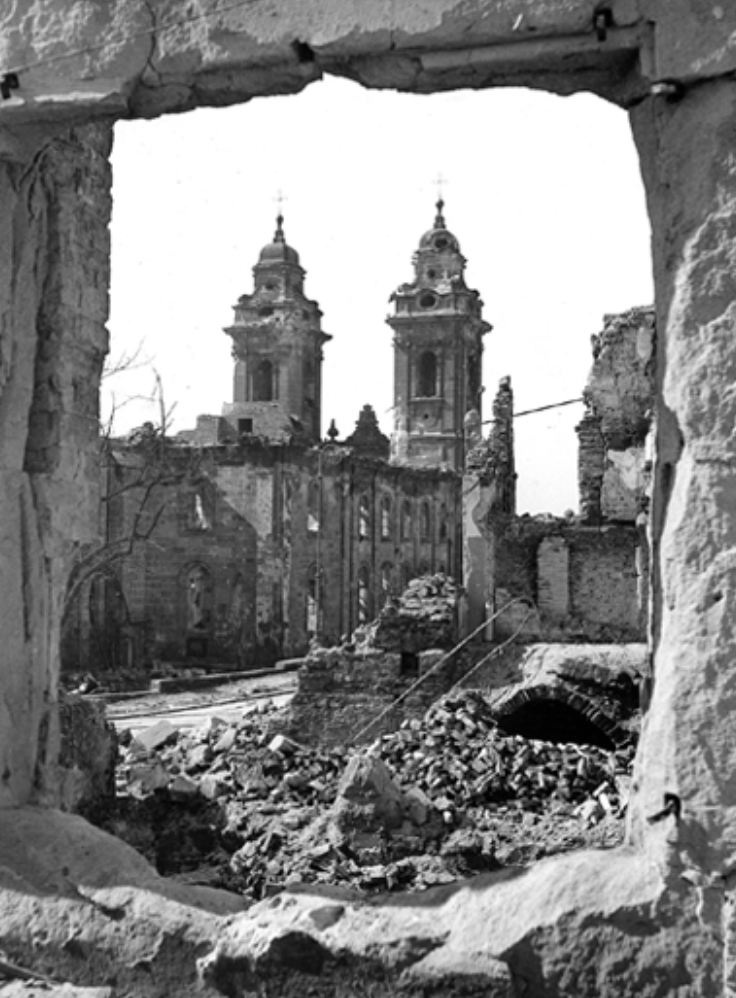
The Church of St. Egidien on Egidienplatz, the only baroque church building in Nuremberg from the early 18th century.
Unknown photographer before 1945 Nuremberg City Archives A76/RF-021-F1-5
The Laufertorturm, one of the four main towers of the last medieval city fortifications.
The Fembo House on Burgstrasse, the only surviving merchant's house from the late Renaissance.
Walter Schröder 1950-1970 Image archive photo Marburg Aufnahme 908.033
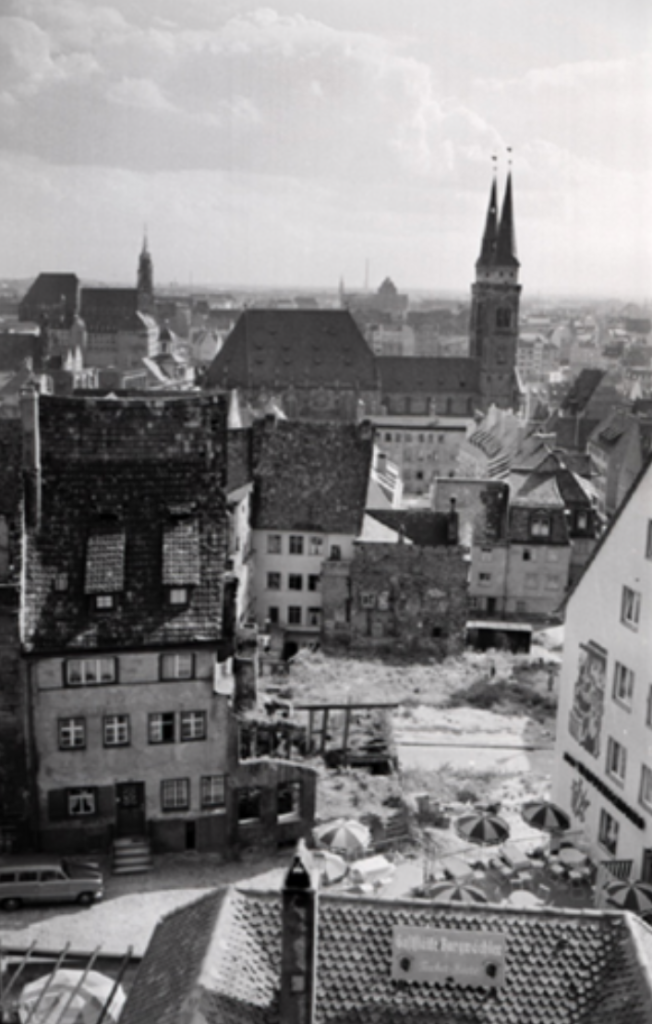
The Sebalduskirche on Winklerstrasse, the oldest parish church in the city and burial place of the local saint Sebald.
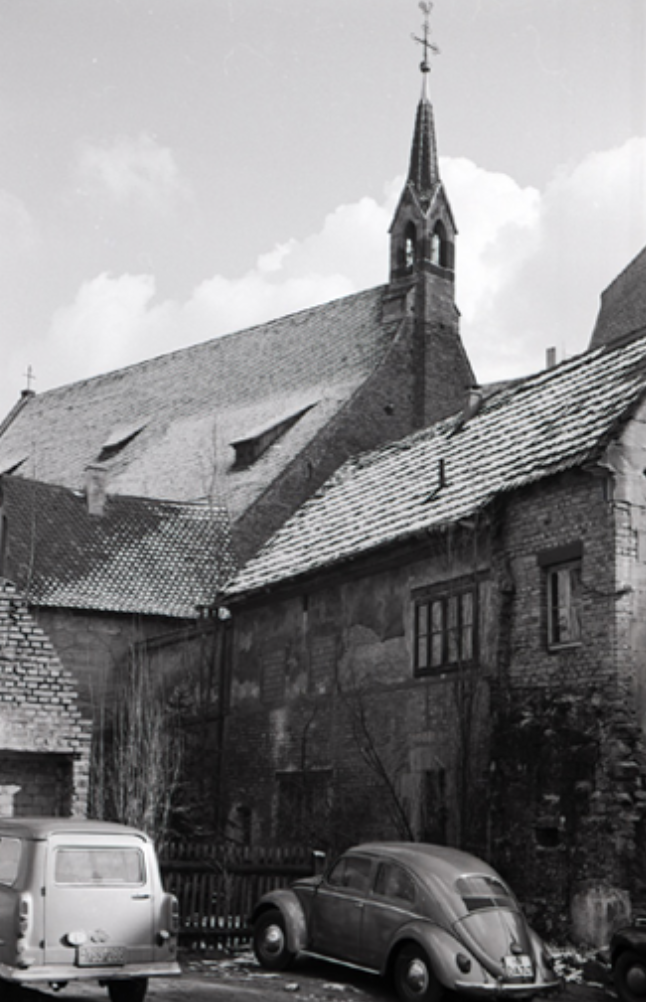
Armin Schmidt before 1945 Nuremberg City Archives A50/AS-225-34a
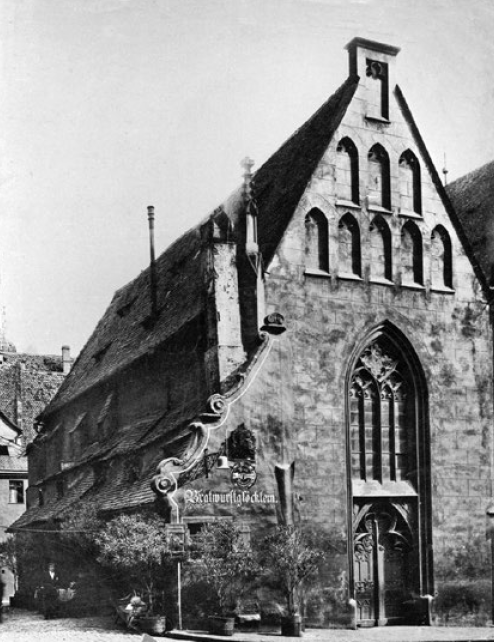
The Moritz Chapel at the Schürstabhaus before its destruction, small late medieval town church with a popular restaurant “Bratwurstglöcklein”.
Hochbauamt before 1944 Nuremberg City Archives A41/II-LR-727-14
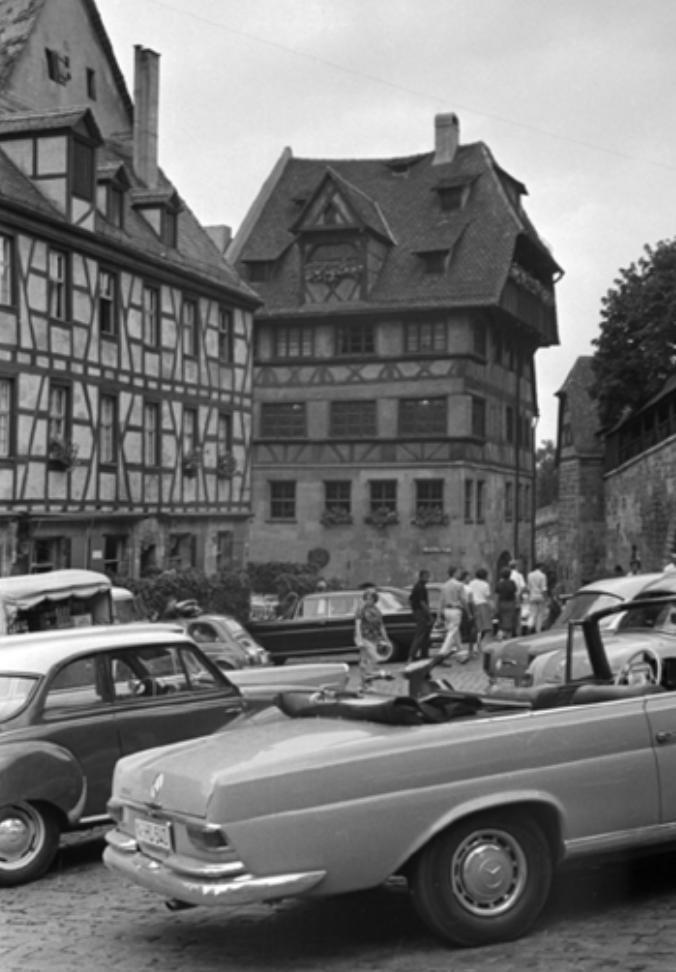
The Schürstabhaus on Albrecht-Dürer-Platz, residence of the patrician Schürstab family from the Gothic period.
Hochbauamt 1951 Nuremberg City Archives A39/III-Fi-A-196
The town hall on the main market, an important Renaissance building by the architect Jakob Wolff the Elder. J. and seat of the Nuremberg Council in imperial city times.
The Weinstadel at Maxplatz, the imperial city's wine warehouse and one of the largest half-timbered buildings in Germany.
Armin Schmidt 1959 Nuremberg City Archives A50/AS-289-4
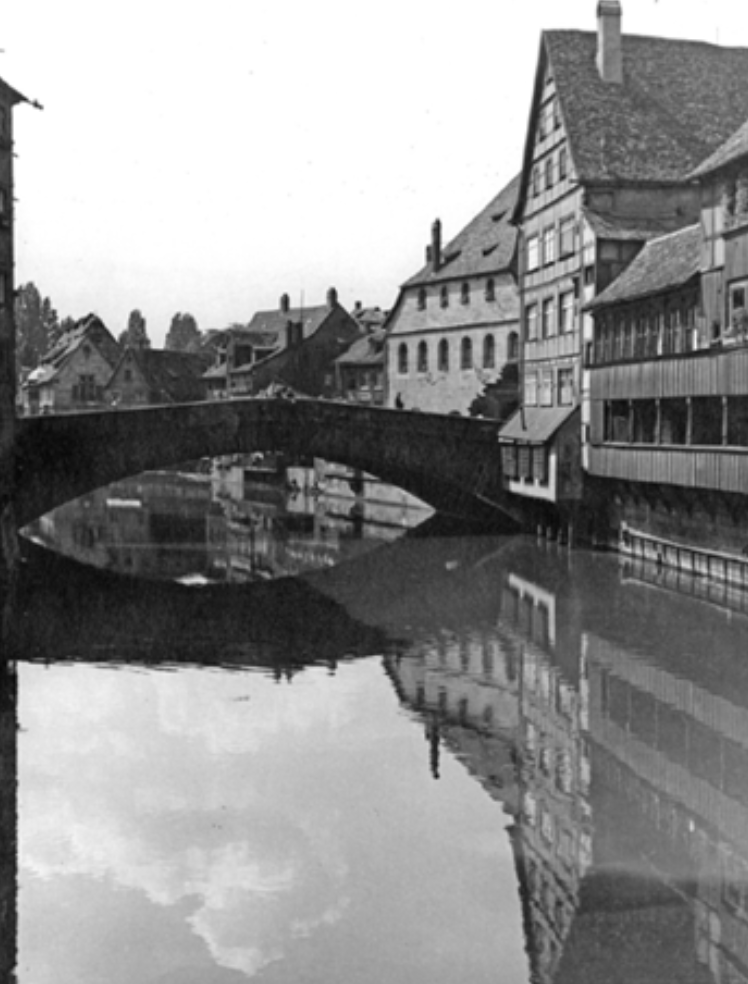
The executioner's house with executioner's footbridge at the flea market. Ensemble of the penultimate city fortifications from the 13th century and later residence of the Nuremberg executioner.
Hochbauamt before 1945 Nuremberg City Archives A39/III-Fi-K-1448
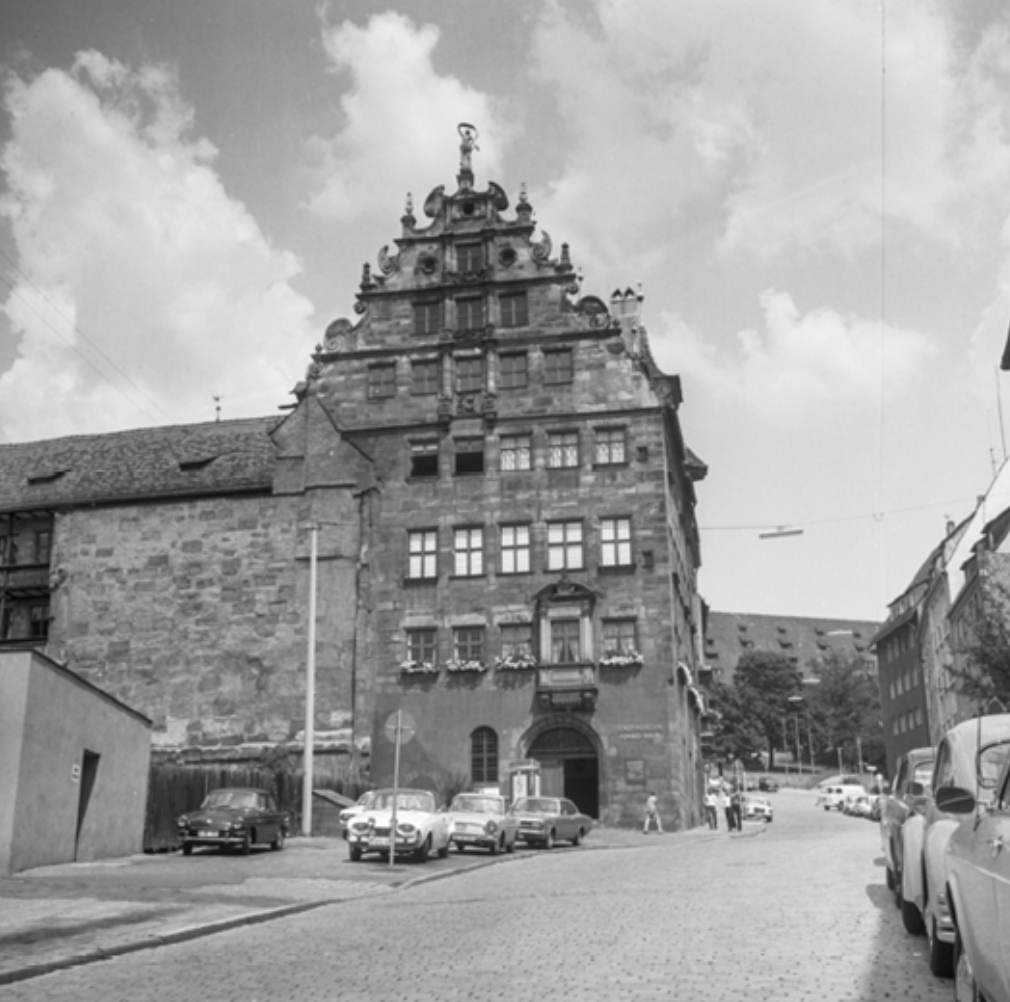
The Unschlitthaus on Obere Wörthstrasse, a large imperial city granary to supply the city's population and the seat of the Unschlittamt (office for further processing of beef tallow).
Hochbauamt Juli 1953 Nuremberg City Archives A39/III-Fi-W-297
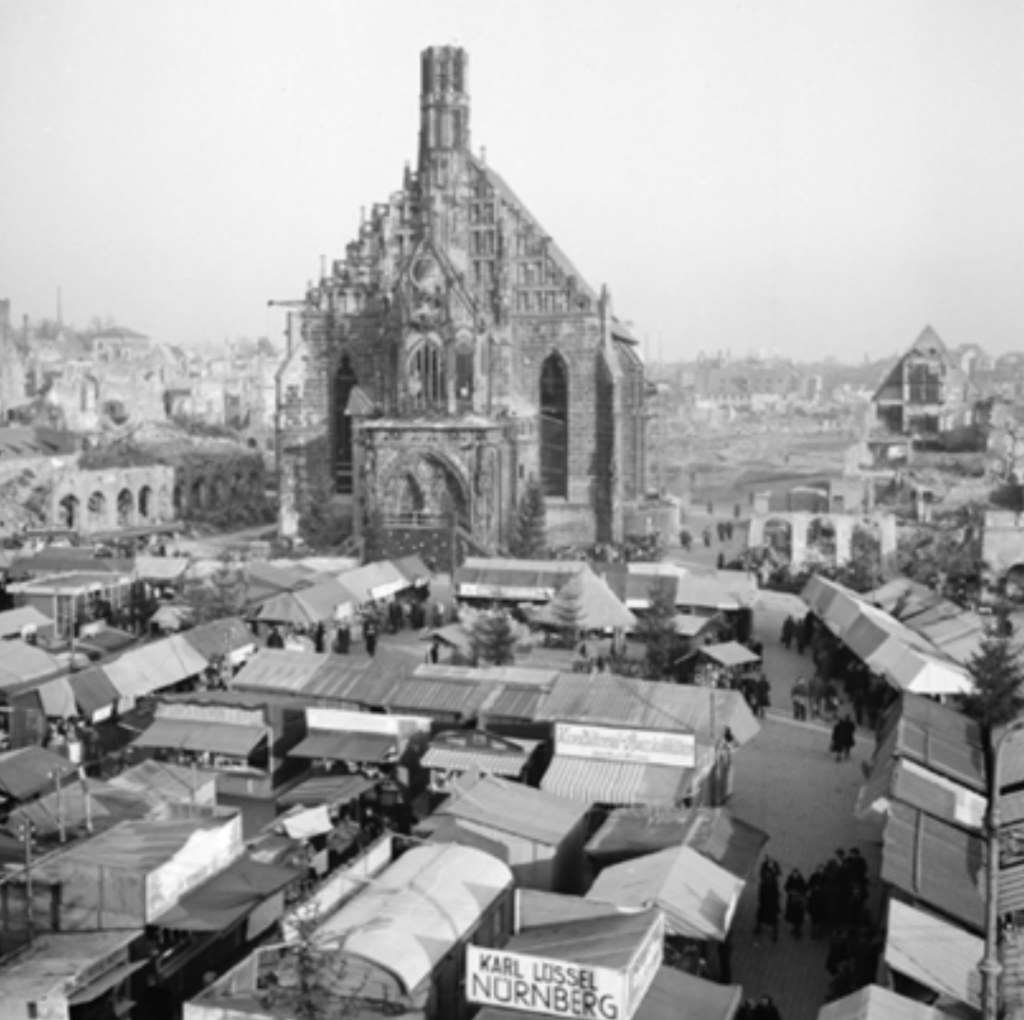
The Frauenkirche on the Hauptmarkt, built in the middle of the 14th century on the instructions of its founder, Emperor Charles IV, in the former Jewish quarter.
Hochbauamt 1948 Nuremberg City Archives A39/I-182-D
The main market, since the Lorenz and Sebald halves were connected in the late Middle Ages, has been the center of the old town and market square in the former Jewish quarter.
Hochbauamt 1948 Nuremberg City Archives A39/I-193-D
The Fleischbrücke, an important bridge structure of the German Renaissance and a central traffic junction in imperial city times.
Unknown photographer 1961 Nuremberg City Archives A64/0101
The Holy Spirit Hospital in Spitalgasse, the largest social institution and most important civic foundation of the Middle Ages.
Armin Schmidt before 1945 Nuremberg City Archives A50/AS-600-11
The main synagogue on Hans-Sachs-Platz before its demolition in 1938, a monumental symbol of liberal-bourgeois Judaism in the 19th and early 20th centuries.
Unknown photographer before 1938 Nuremberg City Archives A76/RF-013-F1-1
The debt tower on the Vordere Insel Schütt, one of the few remaining towers of the penultimate city fortifications from the 13th century.
Armin Schmidt 1958 Nuremberg City Archives A50/AS-253-5
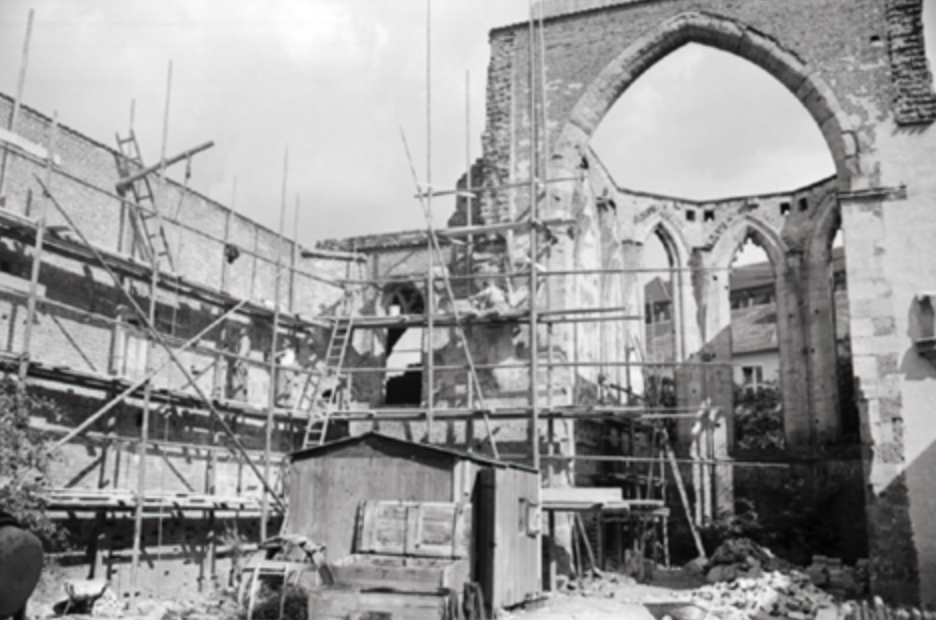
The Katharinenkirche at Katharinenkloster 6, before its destruction, former monastery church of the Dominican Sisters from the 13th century and seat of the Academy of Fine Arts in imperial city times.
Unknown photographer before 1945 Nuremberg City Archives A60/I-301
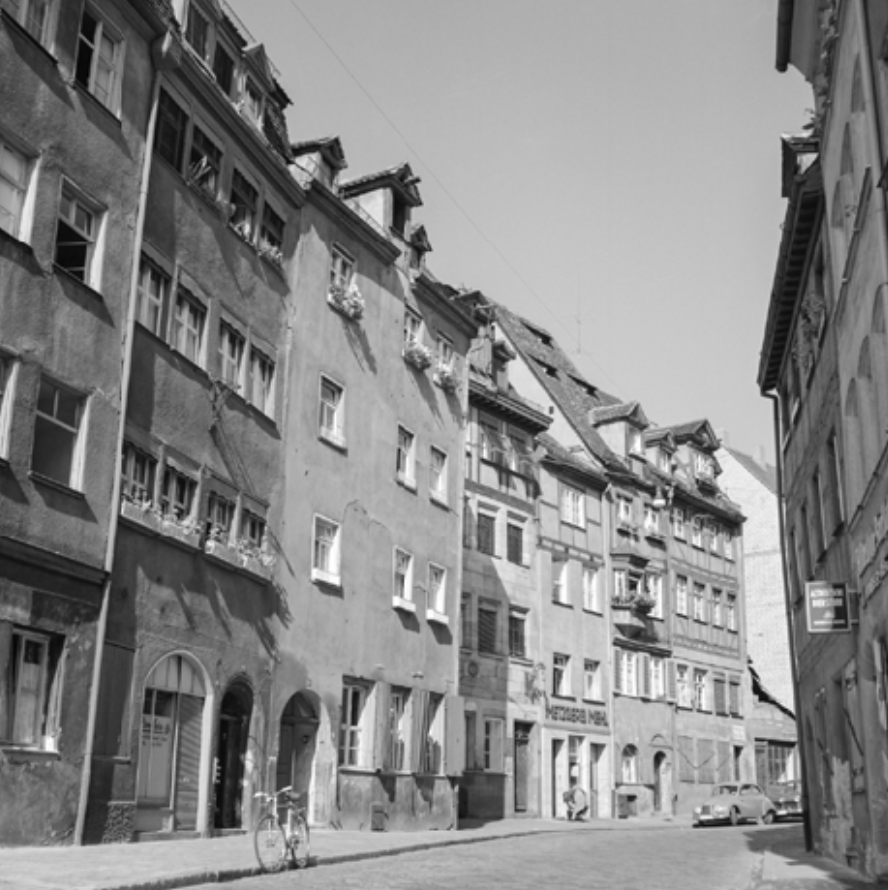
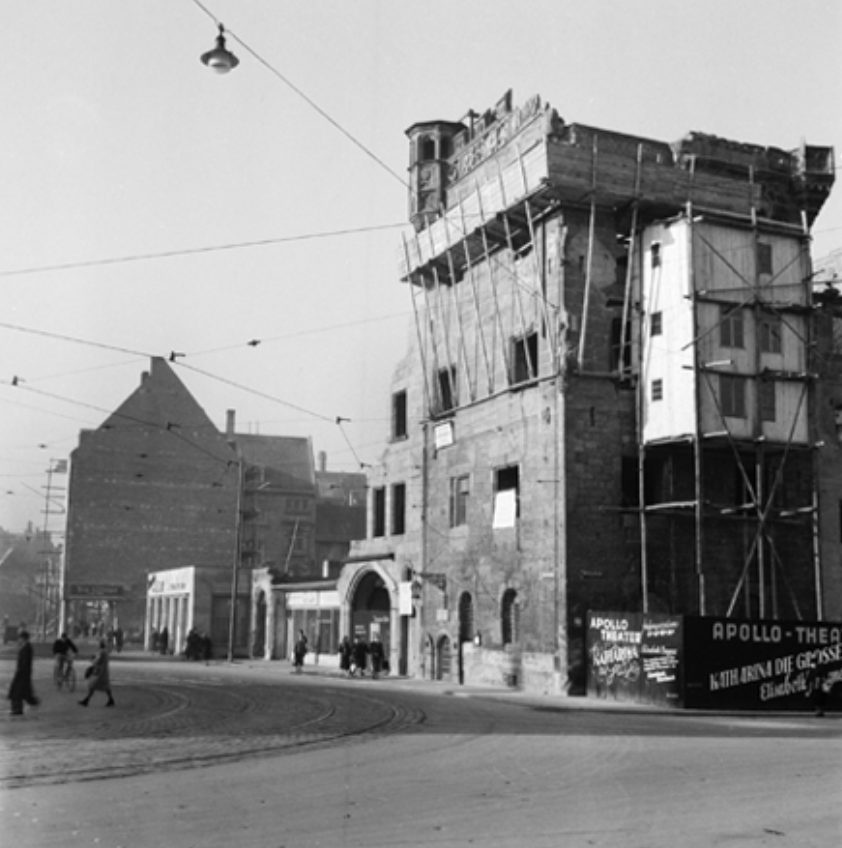
The Nassauer Haus on Karolinenstrasse, the only surviving medieval residential tower.
Hochbauamt 1950 Nuremberg City Archives A39/III-Fi-K-230
The Lorenzkirche on Lorenzer Platz, one of the two large parish churches in the medieval city and a landmark of Nuremberg.
Unknown photographer before 1945 Nuremberg City Archives A76/RF-37-F2-34A
The Church of St. Jakob on Jakobsplatz, a Gothic church building from the 13th century and a stop for pilgrims on the Franconian Way of St. James.
Armin Schmidt 1958 Nuremberg City Archives A50/AS-220-11
The toll hall at Hallplatz, a large imperial city granary to supply the city's population and the seat of the city's customs office.
Lala Aufsberg 1950-1960 Nuremberg City Archives A62/LA-60703a
The Klarakirche on Königstrasse, former church of the Poor Clares monastery in Romanesque and early Gothic style.
Armin Schmidt 1958 Nuremberg City Archives A50/AS-208-4
The Frauentorturm, one of the four main towers of the last medieval city fortifications.
The Kaiserburg castle of Nuremberg, photograph: Uwe Niklas
Nuremberg bratwurst (sausage)
Self-portrait of Albrecht Dürer, copy after Dürer Francisco Nuñez Losada (1889-1973), 1930, oil on wood Museen der Stadt Nürnberg, Kunstsammlungen, Inv.-Nr. Gm 1094
The imperial insignia and other precious objects, from a work called Leich-Be-Gängnisse (Klebeband 16, Seite 91), Stiftung des Fürstlichen Hauses Waldeck und Pyrmont, Hofbibliothek, Inv. Nr. FWHB Arolsen II 66e 130, https://digi.ub-uniheidelberg.de/fwhb/klebeband16/0095G
The Schöner Brunnen fountain in Nuremberg photograph, Museen der Stadt Nürnberg Kunstsammlungen
The television tower at Nuremberg commons
Glazed Elisenlebkuchen gingerbread with almonds Lebkuchen-Schmidt GmbH & Co. KG Photograph: Martin Ammon
The exhibition forum regularly hosts special exhibitions. These are not part of the media guide.
Unfortunately, the media guide only covers so far the newly designed storeys.